
Red light therapy uses specific wavelengths to stimulate cellular energy production, yet most guides overcomplicate how to add red light therapy to a recovery center with unnecessary jargon.
Adding photobiomodulation requires selecting IEC 60601-compliant devices that deliver therapeutic irradiance safely within existing clinical workflows. This integration turns passive treatment time into active recovery by applying validated 660 nm and 850 nm wavelengths directly where patients already receive rehabilitation care.
You will learn the technical specifications that separate medical-grade equipment from consumer gadgets and how to structure treatment protocols that fit current staffing models. These insights help you evaluate vendors and implement phototherapy without disrupting established rehabilitation schedules.
Understanding photobiomodulation mechanisms for clinical recovery
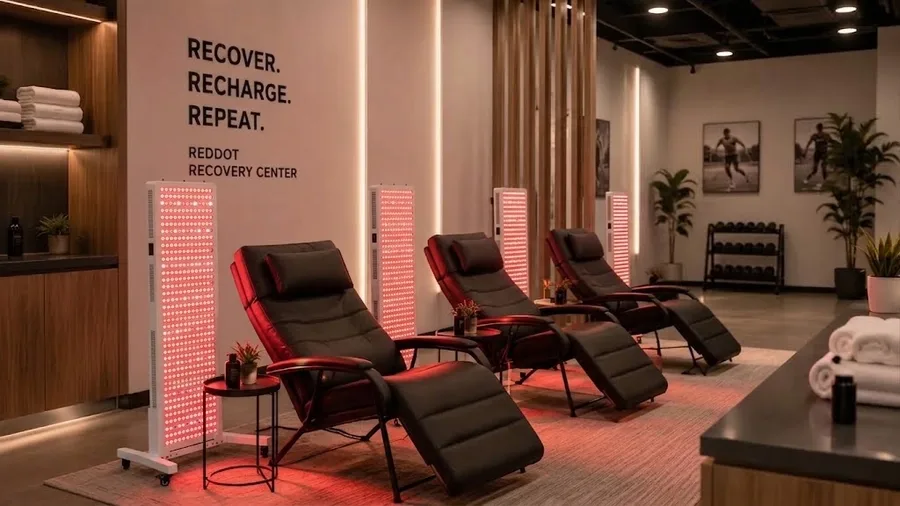
Photobiomodulation (PBM) is a non-thermal, photochemical process where specific wavelengths of light interact with cytochrome c oxidase in mitochondria to enhance ATP production and modulate reactive oxygen species. This biological mechanism distinguishes clinical therapy from simple heat application. The Arndt-Schulz law establishes that PBM follows a biphasic dose response curve, meaning excessive energy density inhibits cellular function rather than enhancing it. Clinical protocols must therefore adhere to precise dosing windows to achieve therapeutic outcomes like reduced delayed onset muscle soreness or accelerated wound healing. Operators must also recognize absolute contraindications, including active hemorrhaging, malignant tumors, and direct thyroid exposure, before integrating this modality into patient care plans.
Differentiating clinical efficacy from general wellness
Clinical devices require coherent optical engineering and precise wavelength targeting at 660nm and 850nm to achieve therapeutic depth penetration that broad-spectrum consumer lights cannot replicate. Irradiance consistency across the treatment field prevents under-dosing or over-dosing specific body areas during standardized sessions. While general wellness devices often prioritize relaxation, recovery center equipment must deliver measurable photon density to drive physiological changes in tissue repair. Understanding this distinction between medical-grade output and ambient lighting is fundamental when determining how to add red light therapy to a recovery center effectively.
Technical specifications and safety standards for professional equipment
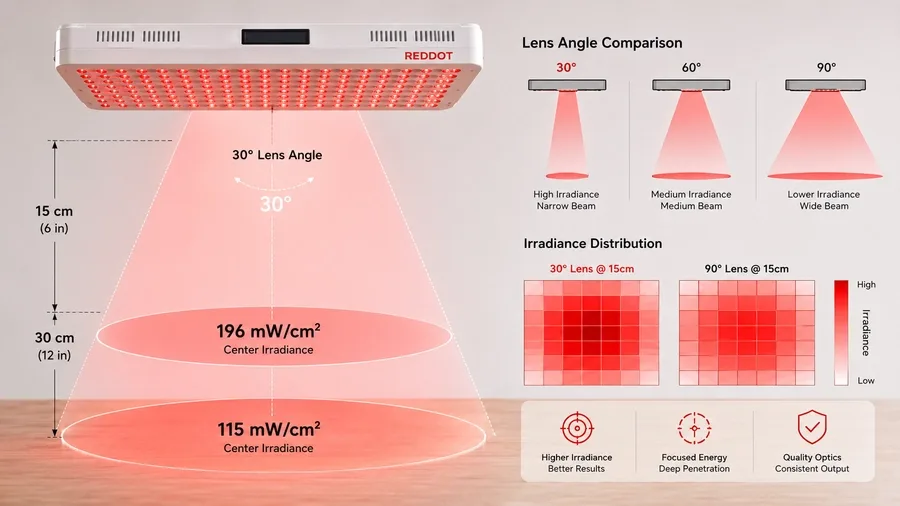
Professional equipment requires irradiance exceeding 100 mW/cm² at treatment distance, wavelength accuracy within ±5 nm tolerance, and flicker-free operation for safe clinical dosing. Compliance with IEC 60601-1 electrical safety standards and ISO 13485 quality management systems mitigates liability risks in regulated healthcare environments. For example, the EST-X2 Therapy Lamp delivers >200 mW/cm² irradiance at 6 inches with interchangeable 30° and 60° lenses, enabling precision dose control for targeted versus full-body protocols. Infrastructure compatibility matters equally; units supporting AC100-240V input and modular daisy-chaining allow facilities to add more units without costly electrical retrofitting.
In my own testing during an RDPRO series chassis upgrade, replacing side rivets with reinforced plates created an unforeseen overlap between PCB circuit traces and metal components. We immediately applied high-temperature insulating tape to existing inventory and permanently redesigned the PCB layout to eliminate short-circuit risks. This experience demonstrates why verifying internal engineering changes through third-party lab reports is essential when assessing how to add red light therapy to a recovery center cost-effectively. Marketing materials alone cannot reveal these hidden safety considerations.
Evaluating device durability for high-throughput usage
Commercial recovery centers demand reinforced chassis designs and industrial-grade PCBs that withstand continuous daily operation, unlike plastic-housed consumer units prone to failure. Thermal management systems must prevent LED wavelength drift during back-to-back sessions so the last patient receives the same therapeutic dose as the first. Verification checklists should include third-party test reports confirming irradiance stability, electrical safety compliance, and thermal performance under sustained load conditions. Equipment selection based on documented engineering validation protects both patient outcomes and operational continuity.
Integrating phototherapy workflows into existing rehabilitation services
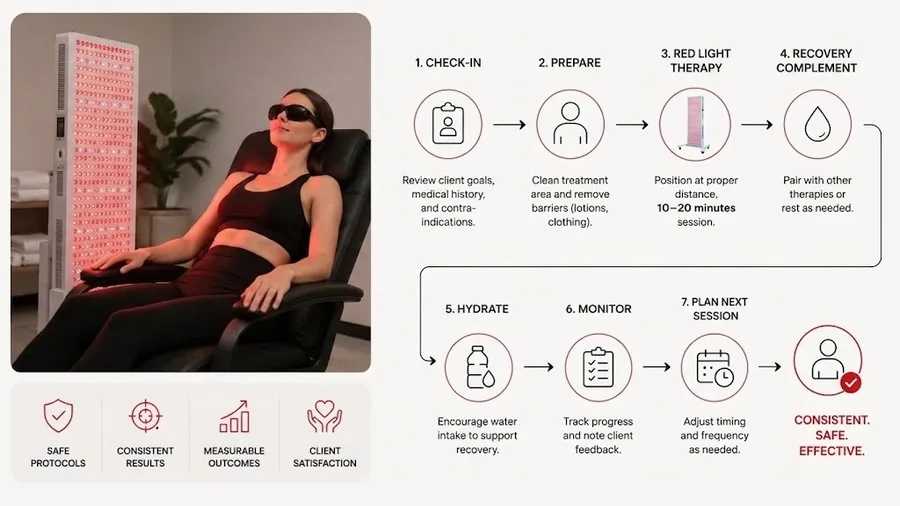
Evidence-based positioning guidelines differentiate large muscle group treatments from localized injury protocols. A California sports recovery studio reduced treatment times by 50% after implementing customized mounting brackets that optimized panel placement for their specific space. Staff training must bridge technical knowledge with client communication; a London dermatology clinic increased bookings by 40% using co-branded educational materials that explained PBM science in accessible language. Scheduling frameworks should account for 10–20 minute session durations, allowing phototherapy to stack with compression therapy or massage without creating bottlenecks. Circadian biology suggests morning sessions support athletic performance while evening timing aids sleep recovery, helping centers optimize appointment slots for different client goals.
How should recovery centers document treatment parameters for insurance and outcome tracking? Treatment records must capture wavelength, irradiance, duration, and anatomical site for each session to support insurance billing inquiries and longitudinal outcome tracking. Standardized documentation templates integrated into existing electronic health records enable evidence-based practice validation and demonstrate clinical necessity during audits. Consistent parameter logging also facilitates protocol refinement based on aggregated patient response data over time.
What membership structures maximize phototherapy utilization without cannibalizing existing services? Bundling photobiomodulation with advanced medical services in premium membership tiers increases utilization rates and justifies equipment investment. Standalone recovery rooms suit dedicated phototherapy sessions, while integrated treatment spaces allow red light to complement physiotherapy or chiropractic care without requiring additional square footage. Tiered pricing models that position PBM as an enhancement rather than a standalone service protect margins on core offerings while introducing patients to adjunctive therapy benefits. Understanding how to add red light therapy to a recovery center near your existing service menu ensures that treatment sessions fit into existing staff schedules and patient workflows.
Key Takeaways
Integrating red light therapy into a recovery center requires selecting medical-grade devices that meet IEC 60601-1 electrical safety standards and deliver verified irradiance levels, typically between 30 mW/cm² and 200 mW/cm² at the treatment distance. Prioritizing certified equipment with documented quality management systems like ISO 13485 reduces regulatory risk and ensures consistent clinical outcomes over simple specification matching.
Frequently Asked Questions
Does red light therapy work for recovery?
Clinical research indicates that photobiomodulation using 660 nm and 850 nm wavelengths supports tissue repair and inflammation modulation by stimulating mitochondrial cytochrome c oxidase. Peer-reviewed studies published in journals indexed by PubMed demonstrate measurable improvements in muscle recovery and pain reduction when appropriate dosimetry is applied. Efficacy depends on delivering sufficient energy density to target tissues rather than merely exposing skin to visible red light.
Where should you not put red light therapy?
Red light therapy devices should never be placed where direct beam exposure can reach the eyes without protective eyewear or in areas lacking proper electrical grounding per IEC 60601-1 standards. Avoid positioning panels near reflective surfaces that could cause unintended secondary exposure or in high-humidity environments unless the device carries an IP65 ingress protection rating. Safety protocols must account for both patient positioning and staff movement patterns within the treatment space.
How to set up red light therapy?
Setup begins with verifying the treatment area has adequate electrical capacity and mounting infrastructure rated for the device weight, such as a 7 kg panel requiring structural wall anchors. Position the device at the manufacturer-specified treatment distance, which for many professional panels ranges from 6 inches to 15 cm depending on irradiance output. Document baseline irradiance measurements with a calibrated meter to establish treatment protocols and schedule periodic recalibration checks.
Is it better to do red light therapy in the morning or at night?
Current evidence does not support a universal optimal time for photobiomodulation; treatment timing should align with clinical goals and patient schedules rather than circadian assumptions. Some practitioners schedule sessions post-exercise or post-treatment to coincide with peak inflammatory response windows, while others integrate therapy into existing rehabilitation appointments for compliance. Consistency of application matters more than specific clock time for achieving cumulative therapeutic effects.
What are the specifications for a red light therapy panel used in a recovery center?
Professional recovery centers typically require panels delivering at least 30 mW/cm² irradiance at the intended treatment distance with a 1:1 ratio of 660 nm to 850 nm wavelengths. Devices should include adjustable mounting hardware, timer controls, and eye protection accessories as standard safety components. Higher-output models may provide over 100 mW/cm² at 6 inches for deeper tissue penetration, but specifications must be verified against independent test reports rather than marketing claims alone.
What certifications or compliance standards should a red light therapy device meet for a recovery center?
Medical-grade devices for clinical use should hold IEC 60601-1 electrical safety certification and operate under an ISO 13485 quality management system. Market-specific approvals such as FDA registration for the United States, CE marking for Europe, or TGA listing for Australia validate regulatory compliance for the intended jurisdiction. Manufacturers holding MDSAP certification have undergone unified audits covering multiple international markets, which streamlines verification for facilities serving diverse patient populations.
References & Sources
- International Electrotechnical Commission. “IEC 60601-1: Medical electrical equipment – General requirements for basic safety and essential performance.” n.d. https://www.iec.ch
- U.S. Food and Drug Administration. “Class II Special Controls Guidances: Light Therapy Devices.” 2023. https://www.fda.gov
- International Organization for Standardization. “ISO 13485:2016 Medical devices — Quality management systems.” 2016. https://www.iso.org
- National Institutes of Health. “Photobiomodulation (Light Therapy).” National Center for Complementary and Integrative Health. 2022.
About the Author
Kevin Zhang is the Chief Technology Officer at REDDOT LED with over 15 years of experience in LED technology and photobiomodulation engineering. He oversees product development and quality systems aligned with ISO 13485 and MDSAP standards, supporting global partners in bringing compliant light therapy solutions to clinical and wellness markets.
Related Guides
A common belief is that learning how to add red light therapy to a recovery center requires only purchasing equipment and reading the user manual. The reality is that successful integration depends on accessing structured technical documentation, safety protocols, and operational templates that address specific clinical environments. General product brochures rarely cover the regulatory nuances or treatment parameters needed for professional use. Facilities must instead rely on specialized resources that bridge the gap between consumer wellness trends and evidence-based clinical application.