
Regulatory requirements for photobiomodulation and red light therapy devices continue to depend on intended use, product classification, claims, and local rules, making blanket licensing advice unreliable.
Whether you need a license to perform red light therapy depends on your jurisdiction, the services you provide, the device’s intended use and labeling, and applicable professional-practice rules. General wellness positioning may reduce medical-device regulatory requirements, but it does not automatically eliminate local business, facility, or practitioner licensing requirements.
Understanding how your specific equipment classification dictates operator requirements prevents costly compliance mistakes. You will be able to map out the correct regulatory pathway for your spa, clinic, or retail business before purchasing any hardware.
How equipment classification determines if you need a license for red light therapy
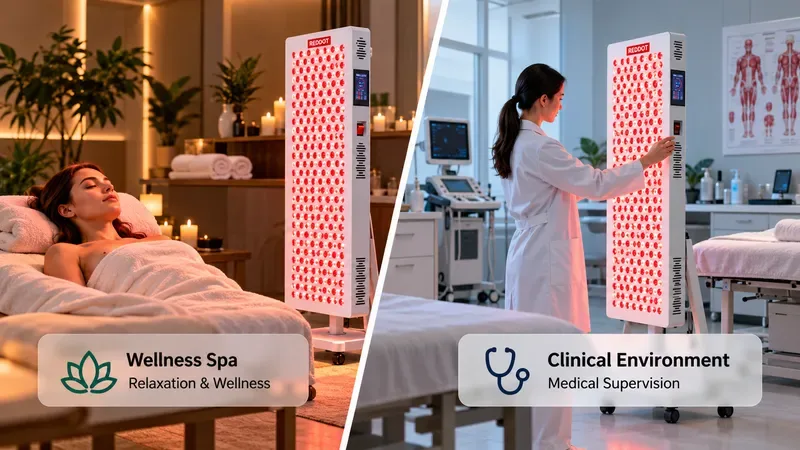
Whether you need a license to perform red light therapy depends entirely on how local health authorities classify the specific device in your hands. The light itself does not trigger legal requirements. General wellness devices typically require only a standard business permit, while medical-grade photobiomodulation systems often mandate operation by or under the supervision of a licensed healthcare professional. Kevin Zhang, Chief Technology Officer at REDDOT LED with over 15 years of experience in optical engineering and non-invasive therapeutics R&D, notes that working through IEC 60601 safety standards for global OEM/ODM customers reveals a direct link between device safety engineering and practitioner liability. When hardware is engineered to medical electrical safety standards, regulators treat it differently than consumer electronics.
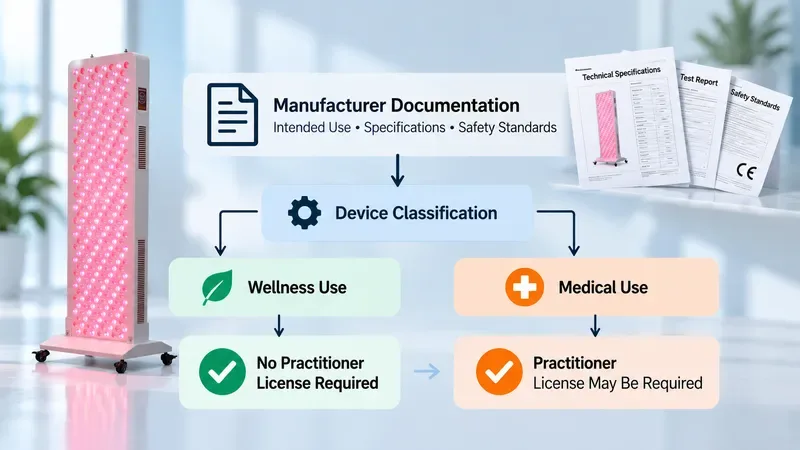
The U.S. Food and Drug Administration (FDA) guidance document “General Wellness: Policy for Low Risk Devices” defines this boundary clearly. It separates low-risk wellness products, which do not require a practitioner license, from medical devices intended to treat or diagnose conditions, where licensing becomes necessary. This distinction forms the foundation for B2B buyers including wellness brands, clinics, and retailers. Choosing the wrong hardware classification can inadvertently force end-clients into strict medical licensing hurdles rather than allowing them to operate freely under standard commercial licenses.
| Classification | Typical Operator Requirement | Marketing Boundary |
|---|---|---|
| General Wellness Device | Standard business permit | Relaxation, general well-being |
| Medical-Grade PBM System | Licensed healthcare professional | Treatment, diagnosis, specific therapeutic outcomes |
The hardware’s documented intent dictates the operator’s legal standing. Understanding this classification framework prevents costly compliance failures before a single device ships.
Ranking operator pathways by regulatory burden and market entry speed
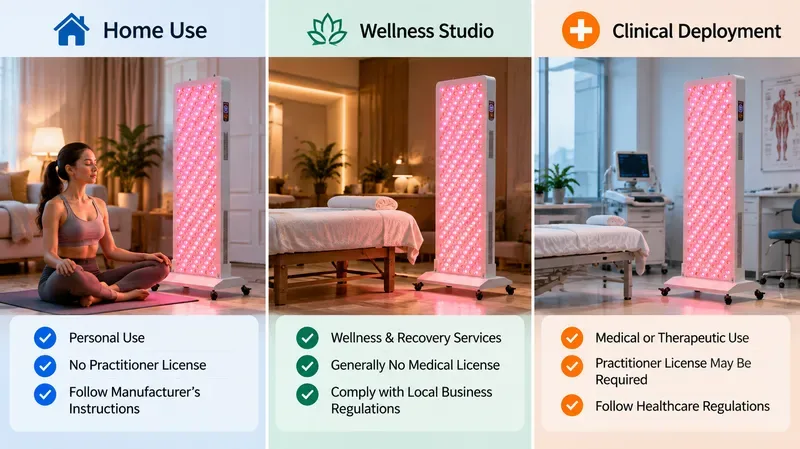
Facility owners, wellness entrepreneurs, and retail buyers evaluating market entry legality must understand the regulatory friction attached to different operational models. These entries are ranked based on required human credentialing and speed to commercial deployment.
Do I need a special credential to offer red light therapy in my spa? If the hardware is classified as a general wellness device and marketed strictly for relaxation or general well-being, no specialized medical credential is required. This pathway carries the lowest barrier to entry. Operators function under standard business licenses because the devices avoid medical claims entirely, making it the fastest route to commercial deployment.
What changes when the equipment carries medical clearances? The supervised clinical pathway introduces moderate barriers. It requires a licensed practitioner, such as a physical therapist or dermatologist, to oversee treatments because the hardware carries medical device clearances intended for specific therapeutic outcomes. Deployment takes longer due to staffing and facility compliance checks.
The independent medical practice pathway represents the highest barrier. It demands specialized medical board certifications and facility permits, as the equipment is classified strictly as a diagnostic or treatment tool under rigorous health authority oversight. Market entry here moves at the pace of institutional approval.
Understanding red light therapy certification is essential across all tiers. The operator’s required credentials are inextricably linked to the hardware’s regulatory status rather than an arbitrary industry rule. A device’s clearance level writes the job description for the person operating it.
Deeper notes on the top three operational classifications
Devices like wearable belts or mats avoid medical licensing triggers by adhering to strict marketing boundaries. A targeted wearable solution operating at 25W with 120 LEDs and a 660nm:850nm 1:2 wavelength ratio is designed specifically for home use and local care where no medical license is required. By positioning these tools for daily waist care or post-workout muscle recovery rather than disease treatment, manufacturers keep them within the general wellness classification.
Multi-market clearance directly influences operator rules in supervised clinical settings. The T1 Desktop Panel holds FDA, FCC, CE, and ROHS certifications. Its 120pcs x 1W LED configuration with a 660nm:850nm 1:1 wavelength ratio demonstrates how achieving specific clearances dictates whether an end-user needs a specialized medical license or just a standard business permit. When a panel clears medical thresholds, the operator must match that regulatory weight.
Manufacturing rigor sets the ceiling for independent medical practice classifications. REDDOT LED holds MDSAP and ISO 13485 certifications alongside FDA, TGA, UKCA, and CE marks. These manufacturing processes meet the Medical Device Single Audit Program standards that directly dictate whether a device is legally classified as requiring a licensed medical practitioner to operate.
In my own testing during SMT process optimization, I found that stencil and pad design precision directly impacts this compliance chain. We had issues where stencils were ordered without considering production requirements, causing width mismatches with the squeegee and poor solder paste application. PCB pad designs for dual-core four-pin LEDs were too small, leading to cold joints. We established a new standard requiring the stencil’s working area to be 6cm wider than the squeegee, and we expanded the solder pads by 0.8-1mm on each side. These microscopic engineering tolerances ensure devices meet IEC 60601 safety standards, preventing regulators from reclassifying a wellness device as a hazardous medical tool that would demand stricter operator licensing.
To verify your operational classification before purchasing equipment, follow these steps:
- Request the device’s exact regulatory clearance documents from the manufacturer.
- Confirm whether the marketing copy aligns with general wellness or medical treatment claims.
- Cross-reference the hardware’s safety standard compliance (such as IEC 60601-1) with your local jurisdiction’s operator requirements.
- Verify the quality management system backing the production, such as ISO 13485 records.
Hardware engineering tolerances determine the legal category your business will occupy.
Choosing the right compliance strategy for your specific business model
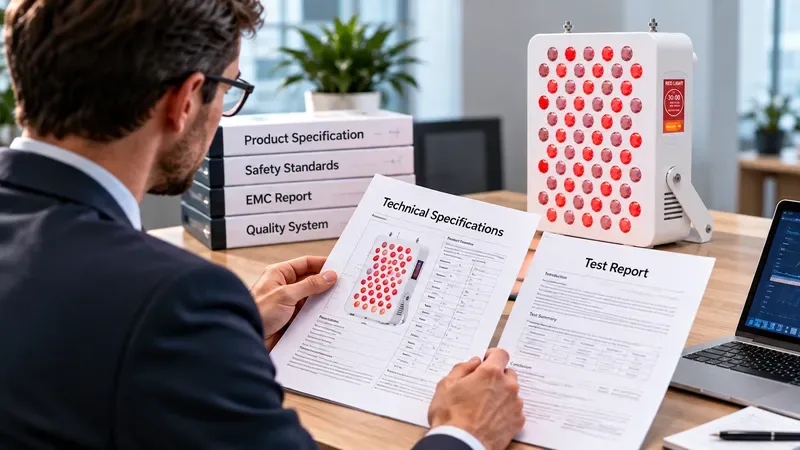
Selecting between product classes like full-body panels or targeted wearables requires matching the hardware to your target market’s legal constraints. If a buyer wants to sell to unlicensed spas, they must source hardware engineered and documented strictly for general wellness. Introducing a medically cleared device into an unlicensed commercial space creates immediate legal exposure.
Proper manufacturer documentation supports lawful commercial operation. REDDOT provided full TGA and SAA documentation upfront for a major Australian retailer expanding their health tech category. This enabled the retailer to fulfill a massive initial order with zero defects and legally expand without customs risks, clarifying exactly what certifications a red light therapy device should have near the point of import. Documentation precedes deployment.
Partnering with manufacturers who offer complete OEM and ODM services ensures the hardware’s regulatory identity aligns with the buyer’s intended commercial use case. From concept design to certification assistance, integrated engineering prevents misclassification. Asking the manufacturer for specific compliance dossiers, such as WALT dosage guidelines alignment or ISO 13485 quality management records, before purchasing is the most reliable way to determine if you need a license for red light therapy in your specific jurisdiction.
Common belief: Any red light panel can be placed in any commercial setting as long as the business has a general operating license. What is actually true: The hardware’s documented regulatory classification dictates the venue’s legal requirements. Placing a medically cleared photobiomodulation system in an unlicensed spa violates the device’s approved operational parameters. Conversely, marketing a general wellness belt with clinical treatment claims forces it into a regulated medical category retroactively. The manufacturer’s compliance dossier defines the legal boundaries of the room where the device operates. Your sourcing strategy is your licensing strategy.
How global variations change the licensing answer
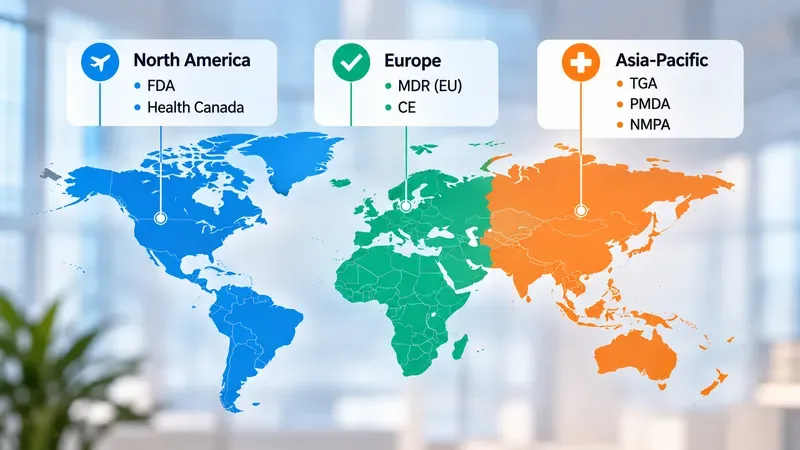
The U.S. Food and Drug Administration (FDA) approach to photobiomodulation differs significantly from international frameworks. According to the Therapeutic Goods Administration (TGA) in Australia, therapeutic light devices fall under distinct regulatory classifications that alter practitioner licensing requirements compared to North America. A device cleared for over-the-counter wellness use in one country might demand clinical supervision in another.
The International Electrotechnical Commission (IEC) establishes baseline expectations through the IEC 60601-1 standard for medical electrical equipment safety. These universal device engineering classifications influence localized operator regulatory requirements across Europe and Asia. When hardware meets these stringent electrical safety benchmarks, local health authorities often apply stricter operator credentialing rules. The World Association for Photobiomodulation Therapy (WALT) treatment dosage and application guidelines provide additional context. While WALT protocols are not laws, standardized clinical guidelines influence professional credentialing expectations globally, shaping how local boards interpret safe operation even when statutes vary.
Common belief: An FDA registration automatically makes a device legally operable by anyone worldwide. **What is actually true: FDA establishment registration is an administrative requirement; it does not, by itself, authorize unrestricted use. Depending on the device’s intended use and destination market, applicable requirements may include FDA 510(k) clearance, electrical safety testing to IEC 60601-1, and quality system requirements. REDDOT LED exports to over 80 countries and operates production facilities in China and Thailand. Its engineering teams review the requirements for each target market and prepare model-specific documentation so customers can assess the device’s regulatory status. Do you need a license to perform red light therapy? That depends on local rules, the services offered, and who performs them.
Key Takeaways
A professional license to perform red light therapy is only legally required when the device operates as a regulated medical device, such as those cleared under FDA 510(k) or registered on Australia’s ARTG. For businesses using general wellness devices that emit standard wavelengths like 660 nm and 850 nm, a basic business permit and documented staff training are typically sufficient to operate legally. Verifying your specific device’s regulatory classification before opening for business prevents fines and protects clients from unverified treatments.
Frequently Asked Questions
What are the qualifications needed to perform red light therapy?
The qualifications depend entirely on whether the device is classified as a general wellness product or a regulated medical device. Operating a medical-grade photobiomodulation unit often requires a licensed healthcare professional, such as a physical therapist or dermatologist, depending on state or national laws. General wellness devices typically require no formal medical degree, though documented manufacturer training is standard practice. The FDA regulates medical devices through pathways like 510(k) clearance, which directly influences who can legally administer the treatment.
Can anyone do red light therapy?
Yes, individuals can use general wellness red light devices at home without any professional supervision or licensing. However, administering clinical-grade treatments to paying clients in a commercial setting usually requires specific business permits and adherence to local health regulations. Home panels generally run lower irradiance levels compared to professional equipment, making them safe for unsupervised consumer use. Always check local jurisdiction rules, as some regions restrict commercial use of any light-emitting device to licensed practitioners.
Is there a free online certification for red light therapy?
No universally recognized government body issues a standardized, free online certification for red light therapy practitioners. Some manufacturers provide complimentary training modules for their specific hardware, but these documents verify product familiarity rather than legal authority to practice. Legitimate clinical credentials, such as those tied to operating IEC 60601-1 compliant medical equipment, require formal education through accredited institutions. Relying solely on an unaccredited internet certificate will not satisfy health inspectors if a device is classified as a medical instrument in your region.
Can red LED lights be considered red light therapy?
Standard household red LED bulbs do not qualify as red light therapy because they lack the specific wavelengths and controlled irradiance required for photobiomodulation. True red light therapy relies on precise wavelengths, most commonly 660 nm for superficial tissue and 850 nm for deeper penetration, delivered at measurable intensities. A generic decorative bulb emits broad-spectrum visible light without therapeutic dosimetry. Medical and wellness standards, including those referenced by ISO and the IEC, define strict performance thresholds that ordinary lighting products do not meet.
References & Sources
- U.S. Food and Drug Administration (FDA). “Medical Devices.”
- International Electrotechnical Commission (IEC). “Standards for Medical Electrical Equipment.”
- International Organization for Standardization (ISO). “ISO 13485: Medical devices — Quality management systems.”
- Therapeutic Goods Administration (TGA). “Australian Register of Therapeutic Goods (ARTG).”
- World Health Organization (WHO). “Radiation: Photobiomodulation and Light Therapy.”