
Photobiomodulation research shows 660 nm and 850 nm wavelengths stimulate mitochondrial ATP production. If you are asking whether red light actually helps with recovery, the physics behind that number explains why it does.
Research suggests that red and near-infrared photobiomodulation can support certain aspects of muscle recovery when appropriate wavelengths and optical doses are delivered. Photons at 660 nm and 850 nm penetrate tissue to stimulate cytochrome c oxidase, increasing cellular energy production. This mechanism accelerates tissue repair after physical exertion.
Understanding how wavelength precision and irradiance output separate effective devices from ineffective ones changes how you evaluate any setup. The sections ahead break down those engineering variables so you can match specific configurations to your physiological needs.
What is red light therapy and how does it actually drive recovery?

Red light therapy, formally known as photobiomodulation (PBM), is a precise optical intervention. It uses specific wavelengths of light to trigger cellular repair processes rather than functioning as a generic wellness trend. The mechanism relies on two primary wavelengths: 660nm red light and 850nm near-infrared light. These photons penetrate the skin and are absorbed by cytochrome c oxidase, an enzyme located inside the mitochondria. This absorption directly stimulates adenosine triphosphate (ATP) production while reducing oxidative stress in damaged tissues. Foundational research published in Photomedicine and Laser Surgery validates this mitochondrial pathway as the primary driver for accelerated muscle and tissue recovery.
Kevin Zhang, Chief Technology Officer at REDDOT LED, has spent over 15 years developing clinically oriented light therapy solutions. His work focuses on engineering PBM products that comply with IEC 60601 safety standards, ensuring that the optical output matches biological requirements without introducing electrical or thermal hazards. Understanding these underlying mechanics separates effective devices from ineffective ones.
When evaluating whether a device can genuinely support tissue repair, check these four factors:
- Check whether the device uses wavelengths supported by research for the intended application, such as red and near-infrared wavelengths around 660nm and 850nm.
- Confirm the irradiance output is measured and stated at a specific distance.
- Check that the manufacturer holds recognized safety certifications like IEC 60601-1.
- Ensure the wavelength ratio is balanced, typically 1:1, for consistent cellular stimulation.
A device that meets these criteria delivers light energy predictably. Knowing how photons interact with mitochondria explains why hardware precision matters so much.
Ranking recovery approaches by wavelength precision and irradiance output
How should you rank red light therapy devices for actual recovery performance?
Approaches must be evaluated based on their ability to deliver therapeutic doses defined by the World Association for Photobiomodulation Therapy (WALT). WALT guidelines emphasize wavelength accuracy, irradiance consistency, and depth of tissue penetration. This ranking serves informed consumers evaluating home devices, sports recovery professionals outfitting studios, and B2B partners sourcing reliable hardware.
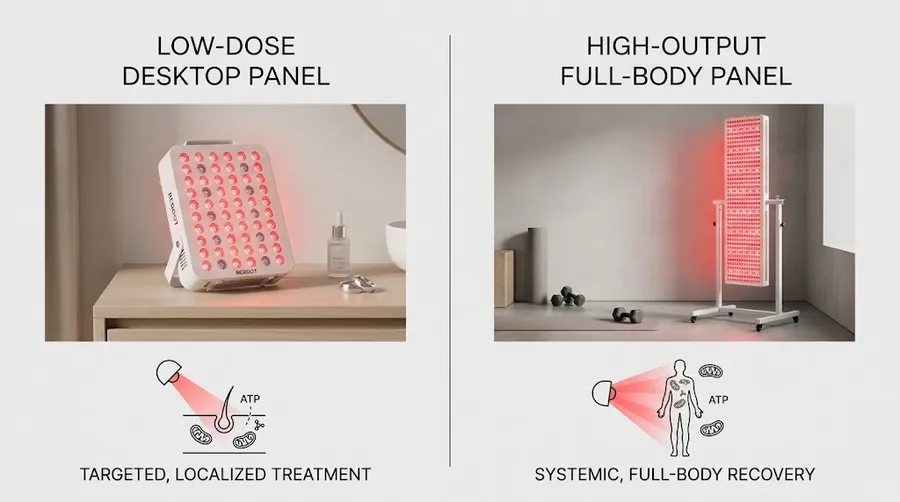
Lower-intensity consumer-grade devices rank at the bottom for deep recovery. They often lack precise 660nm:850nm ratios and consistent irradiance. These units suit superficial skin applications but fail to deliver the energy required for deep muscle recovery. Mid-range desktop configurations rank higher. They provide balanced output for localized daily recovery without overwhelming smaller treatment areas. High-intensity, multi-wavelength professional panels rank at the top. They deliver the deep tissue penetration and high irradiance required for systemic athletic recovery and clinical applications.
Why does matching device output to spatial dimensions matter?
Understanding these performance tiers is essential context for anyone researching how to build a red light therapy recovery room at home. A panel designed for close-range desk use will underperform if mounted across a large gym space. Matching device output to spatial dimensions dictates overall efficacy. Does red light actually help with recovery when the hardware cannot reach the target tissue? Only when the irradiance and wavelength precision align with the intended depth.
Engineering insights behind the top three recovery configurations
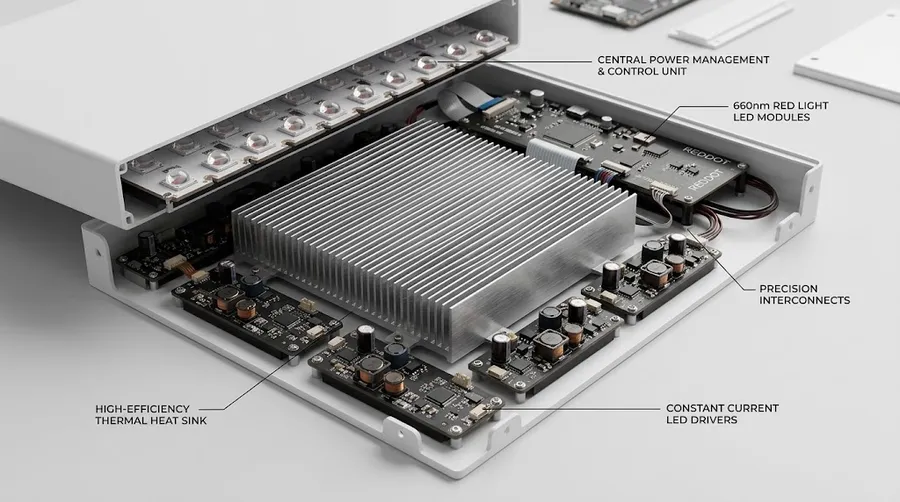
Hardware specifications dictate biological outcomes. The table below compares three distinct engineering approaches used to deliver red and near-infrared light for recovery.
| Configuration Type | Example Model | LED Count & Power | Irradiance Output | Primary Use Case |
|---|---|---|---|---|
| Targeted Desktop | T1 Desktop Panel | 120pcs x 1W | 35mW/cm² at 15cm | Localized daily recovery |
| Scaled Full-Body | RDS1500 Red Light Panel | 300x 5W | 161mW/cm² at 6 inches | Full-body recovery protocols |
| High-Intensity Specialized | EST-X2 Therapy Lamp | 60x 5W | >200mW/cm² at 6 inches | Intensive deep tissue recovery |
The targeted desktop approach uses 120pcs x 1W LEDs to deliver 35mW/cm² irradiance at 15cm with a balanced 660nm:850nm=1:1 wavelength ratio. Lower-dose delivery supports localized daily recovery safely without risking overexposure. The scaled full-body approach requires more power. Systems like the RDS1500 use 300x 5W LEDs to achieve 161mW/cm² irradiance at 6 inches with a 1:1 ratio, providing the data necessary to scale light output for full-body protocols without under-dosing deep tissues. For intensive needs, specialized units push >200mW/cm² irradiance at 6 inches using 60x 5W LEDs, demonstrating the extreme output required for short-duration deep tissue applications.
Manufacturing consistency determines whether these outputs remain stable over time. REDDOT LED operates under ISO 13485-certified quality management to control this variable. Internal design choices have a direct impact on longevity. When working with the original RD-500 product, the layout placed two 2-pin terminal blocks for the power supply output in a very tight space. The fork terminals pressed against the adjacent relay, creating a high risk of breakage. Consolidating them into a single 4-pin terminal block and adding an extra rivet post eliminated the risk of terminal damage. This type of engineering prevents power supply degradation and ensures long-term irradiance stability.
How to choose the right recovery setup for your specific physiological needs
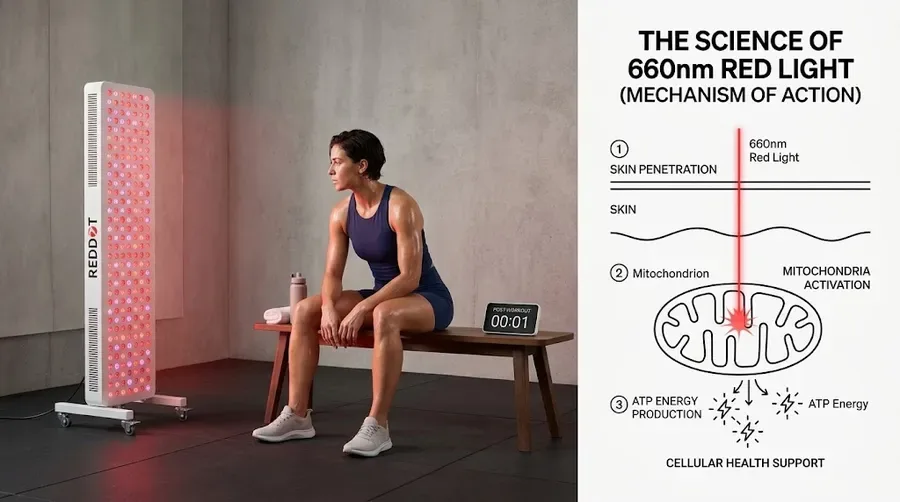
Matching irradiance levels to specific recovery goals prevents wasted sessions. According to WALT dosage guidelines, treating delayed onset muscle soreness (DOMS) requires higher irradiance, generally exceeding 100mW/cm², compared to someone seeking general circulation support. Deep muscle tissue demands more photons to reach the target cells effectively.
Real-world deployment proves this requirement. A California sports recovery studio needed to reduce client treatment times without compromising safety. By adopting FDA-cleared, multi-wavelength panels with customized mounting brackets, the facility achieved a 50% reduction in treatment times. Clients specifically noted the effective deep heat penetration and superb build quality. Form factor dictates how easily a user can maintain their protocol. Stationary setups like the Sauna ONE Base Red Light Stand offer a 34.5x80x22cm compact size ideal for stable, focused sessions in small spaces. Mobile options provide flexibility. Devices equipped with a wheeled stand, such as panels featuring 320x 3W LEDs delivering >103mW/cm² at 6 inches and pulsed 1-40Hz modes, allow dynamic positioning around the body.
Timing also alters the required dose. Research published in Frontiers in Physiology indicates that pre-conditioning before exercise prepares muscles differently than post-exercise application. Pre-workout exposure primes cellular energy reserves, while post-workout exposure accelerates the clearance of metabolic waste.
Follow these steps to match a setup to your physiology:
- Identify your primary goal, distinguishing between surface skin support and deep muscle repair.
- Select a device that delivers the irradiance threshold required for that specific tissue depth.
- Choose a stationary base for dedicated rooms or a wheeled stand for shared gym spaces.
- Adjust your session timing based on whether you are preparing for exertion or recovering from it.
Aligning the hardware with your biological objective answers the question of whether red light actually helps with recovery in your specific case.
Is red light therapy safe for regular recovery use?
Red and near-infrared light are non-ionizing. They do not damage DNA the way ultraviolet light does. The real risks associated with photobiomodulation devices stem from poor device engineering, including electrical faults or inconsistent thermal management. Safety depends entirely on how the hardware is built and tested.
IEC 60601-1 compliance is the global standard for medical electrical equipment. It ensures that recovery devices do not pose electrical or thermal hazards during close-proximity use. Manufacturing standards translate directly into end-user safety. REDDOT LED adheres to CE, RoHS, FCC, ETL, UKCA, and MDSAP certifications. This regulatory framework ensures that the 70+ patented technologies deployed in their devices meet rigorous international safety benchmarks.
Users must also understand the biphasic dose response, known as the Arndt-Schulz curve. While red light is inherently safe, applying excessively high irradiance for too long inhibits recovery rather than accelerating it. Engineered precision prevents users from crossing this inhibitory threshold. The table below contrasts genuine safety markers against misleading marketing claims.
| Safety Factor | Verified Medical-Grade Standard | Unverified Consumer Claim |
|---|---|---|
| Electrical Safety | IEC 60601-1 tested and certified | No third-party electrical testing |
| Quality Management | ISO 13485 certified manufacturing | Basic assembly without documented controls |
| Market Compliance | MDSAP, FDA, CE, UKCA cleared | Vague “FDA registered” statements |
| Dose Control | Calibrated irradiance with timers | Unregulated continuous output |
Verified standards protect users from hardware failures. Recognizing the difference between true compliance and administrative registration keeps recovery protocols safe.
Key Takeaways
Red light therapy supports physical recovery by delivering 660nm red and 850nm near-infrared photons into tissue, where they stimulate mitochondrial ATP production to accelerate cellular repair. For athletes or clinics evaluating devices, verifying the actual irradiance output at the treatment distance matters far more than counting LEDs or reading marketing claims on a box.
Frequently Asked Questions
Does red light recovery actually work?
Yes, red light therapy works for recovery when applied at specific wavelengths and adequate power densities. Peer-reviewed research indexed in PubMed demonstrates that photobiomodulation stimulates cytochrome c oxidase in mitochondria, increasing ATP synthesis and reducing oxidative stress in fatigued tissue. The biological mechanism is well-documented, though clinical results depend entirely on the device delivering a sufficient optical dose to the target area.
Can red light therapy help with recovery?
Red light therapy helps with recovery by accelerating the clearance of metabolic waste and supporting tissue repair after exertion. Devices combining 660nm and 850nm wavelengths reach both superficial skin layers and deeper muscle structures to trigger these cellular responses. Regulatory bodies like the FDA classify advanced light therapy devices as Class II medical equipment, requiring manufacturers to meet strict safety standards such as IEC 60601-1 before bringing them to market.
Does red light therapy actually work for muscle recovery?
Red light therapy effectively supports muscle recovery by reducing delayed onset muscle soreness and shortening the time required between training sessions. Near-infrared light at 850nm penetrates deeper than visible red light, reaching muscle fibers to modulate inflammatory markers. Consistent application using devices that maintain stable irradiance over their lifespan yields measurable reductions in recovery time compared to passive rest alone.
Why don’t doctors recommend red light therapy?
Many doctors hesitate to recommend red light therapy because the consumer market contains unverified devices that fail to deliver the therapeutic doses used in clinical studies. A device might advertise the correct wavelengths but lack the optical engineering or thermal management required to maintain consistent output over time. As regulatory frameworks tighten globally and organizations like ISO publish stricter quality management standards such as ISO 13485 for medical device manufacturing, clinical confidence in properly engineered photobiomodulation equipment continues to grow.
References & Sources
- National Institutes of Health (NIH). “Photobiomodulation and Cellular Mechanisms.”
- U.S. Food and Drug Administration (FDA). “Medical Device Classification and Regulation.”
- International Organization for Standardization (ISO). “ISO 13485 Medical Device Quality Management Systems.”
- International Electrotechnical Commission (IEC). “IEC 60601-1 Safety Standards for Medical Electrical Equipment.”
- Wikipedia. “Low-level laser therapy.”