
Assuming more LEDs or higher wattage guarantees better results quietly costs buyers money on devices that deliver insufficient therapeutic irradiance.
When evaluating what to look for in red light therapy equipment, prioritize verified irradiance at a stated distance, independent safety certifications like IEC 60601-1, and proven thermal management over raw LED counts. A panel advertising 300 diodes means little if poor lens design scatters the 660 nm and 850 nm wavelengths before they reach tissue.
Understanding these engineering realities separates effective photobiomodulation from expensive placebo hardware. The following sections break down optical testing, certification traps, and cooling failures so you can evaluate any device against actual clinical standards.
What is red light therapy and why hardware quality dictates your results?
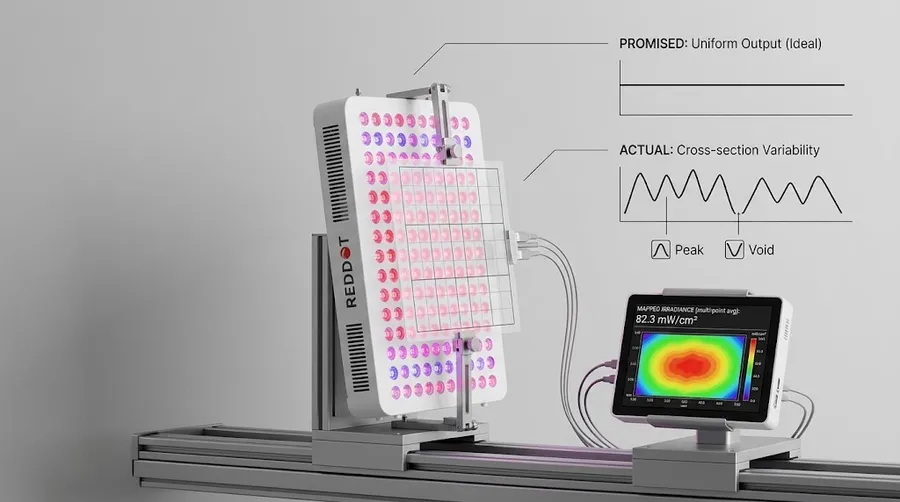
Photobiomodulation (PBM) relies on specific wavelengths of light, typically 660 nm and 850 nm, interacting with cellular mitochondria to stimulate energy production. The biology is universal. The hardware delivering it is not. A widespread misconception suggests all red light produces identical effects. In reality, engineering quality, component authenticity, and manufacturing consistency separate devices that deliver measurable therapeutic doses from those that merely glow.
A California sports recovery studio needed high-irradiance panels to reduce client treatment times without compromising safety. They adopted multi-wavelength panels engineered with customized mounting brackets, which reduced treatment sessions by 50%. That outcome did not come from adding more LEDs. It came from precise optical design.
Evaluating phototherapy hardware requires moving past marketing buzzwords. Kevin Zhang, Chief Technology Officer at REDDOT LED Lighting Limited with over 15 years in LED medical devices, frames the evaluation around verifiable manufacturing criteria like thermal management and optical precision rather than superficial specifications. This guide systematically dismantles common buyer misconceptions about red light therapy equipment. Each section examines what people commonly believe, why those beliefs are technically flawed, and the correct engineering-based approach to evaluating devices.
Understanding this biological baseline explains why hardware variables matter so much.
The optical illusion: why raw wattage does not equal therapeutic power
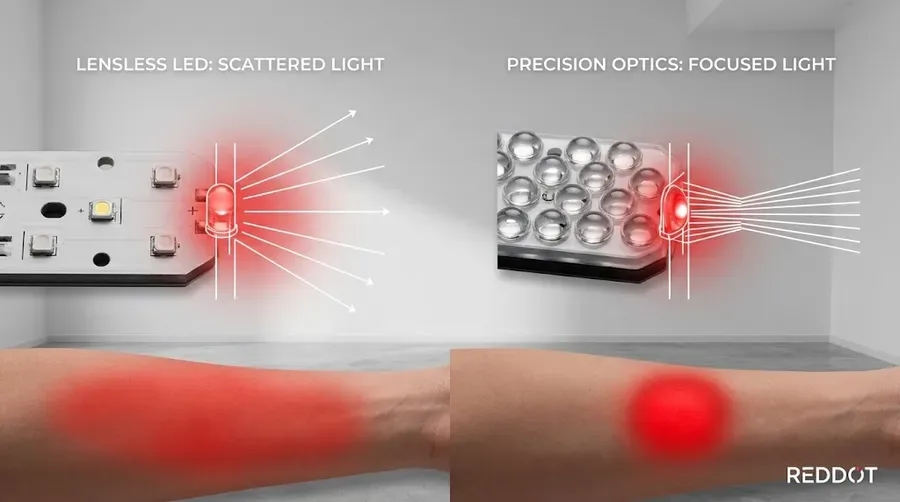
Does a higher total electrical wattage guarantee a more effective device? No. Raw electrical wattage measures energy consumed, not photons delivered to tissue. Buyers frequently assume that a larger number of LEDs or a higher power draw automatically translates to better clinical outcomes. Without proper optical engineering, high-wattage LEDs generate excess heat and scatter light inefficiently, failing to reach necessary irradiance thresholds at the skin’s surface. The World Association for Photobiomodulation Therapy (WALT) dosimetry guidelines emphasize that precise irradiance measurement protocols matter far more than power consumption labels when determining what specs are needed for red light therapy.
How should you evaluate actual light delivery? Evaluate the optical lens design and verified irradiance output. Targeted optical engineering outperforms brute-force wattage every time. For example, the EST-X2 Therapy Lamp uses 30-degree and 60-degree lens options combined with 60 x 5W LEDs to achieve >200mW/cm² irradiance at 6 inches. Lens precision dictates treatment depth and uniformity. Uneven light distribution leads to inconsistent clinical outcomes because some tissue areas receive a therapeutic dose while adjacent areas receive almost nothing.
Most guides suggest simply counting LEDs. The physics points the other way. A device with fewer LEDs paired with precision optics delivers a more consistent, deeper-penetrating dose than an un-lensed array drawing twice the electricity.
Optical precision determines whether a device actually reaches the target tissue.
The safety certification trap: self-declared marks versus true compliance
IEC 60601-1 is the international standard specifically governing the safety of medical electrical equipment. Basic consumer electronics marks do not cover its essential performance requirements. Many buyers see “CE” or “FCC” logos on a product box and assume the device has undergone rigorous, independent medical-grade safety testing suitable for daily human use. That assumption carries serious risk.
Inexpensive devices often rely on self-declared compliance rather than third-party auditing, creating severe electrical and fire risks over thousands of hours of operation. True third-party safety testing marks from bodies like Intertek (ETL) verify that a device can handle real-world electrical loads safely. I witnessed this gap directly during the development of the RD-6000 model. The original design used a standard power inlet unsuitable for daisy-chaining multiple high-current devices, posing a potential overload hazard. We upgraded the power system by replacing the generic inlet with a dedicated, heavy-duty power socket, integrating a metal push-button switch and a fuse for added safety. This eliminated the overload risk and enabled a master/slave function for customers operating multiple units simultaneously. Substandard wiring or inadequate power inlets compromise user safety during prolonged use, a failure mode invisible until it happens.
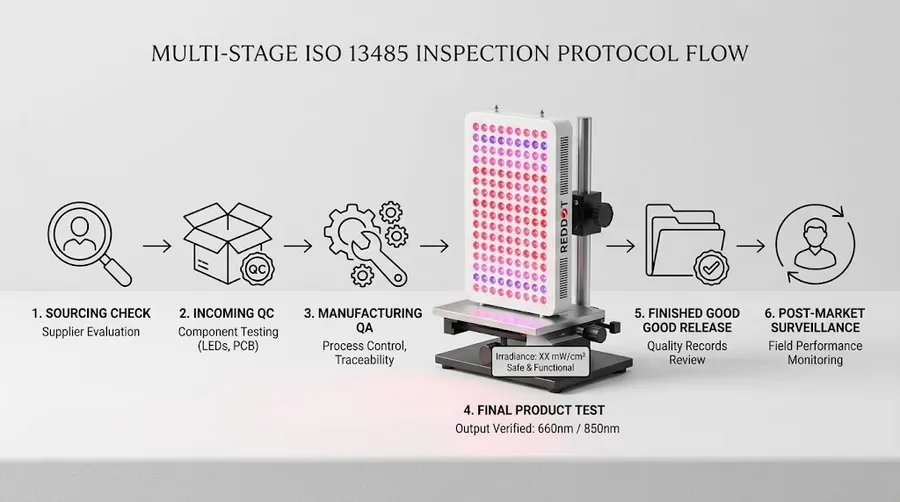
Demand evidence of IEC 60601-1 compliance. Verify that the manufacturer operates under an ISO 13485:2016 certified quality management system. MDSAP (Medical Device Single Audit Program) certification separates serious manufacturers from basic assemblers by harmonizing international regulatory audits into a single recognized framework.
A logo printed on cardboard is not a safety test.
Thermal management and lifespan: the hidden reason cheap devices fail early
Buyers often assume that if a red light therapy device works perfectly out of the box, its performance will remain stable for the advertised 50,000-hour LED lifespan. LEDs degrade rapidly if their junction temperature exceeds safe limits. Devices lacking adequate aluminum heat sinks, proper airflow design, or intelligent fan control suffer from accelerated lumen depreciation. The therapeutic irradiance drops significantly long before the LEDs physically burn out.
The difference between sustained output and rapid degradation comes down to physical build quality.
| Thermal Feature | Engineered Device | Budget Assembly |
|---|---|---|
| Housing Material | Heavy-duty metal | Lightweight plastic |
| Heat Dissipation | Sized aluminum fins | Minimal or absent |
| Output Stability | Maintained over time | Rapid lumen depreciation |
| Safety Certifications | Verified third-party marks | Often self-declared |
Heavy-duty metal housings dissipate heat effectively, while lightweight plastics trap it. Inspect the size and fin density of internal heat sinks, and ask manufacturers for LM-80 lumen maintenance data. The T1 Desktop Panel illustrates how balancing portability, power, and thermal safety demands exact engineering. Achieving 35mW/cm² irradiance at 15cm using 120pcs x 1W LEDs within a compact 0.44kg, 30x20x1.5cm footprint while maintaining FDA, FCC, CE, and ROHS certifications requires thermal management that cheap plastic devices cannot replicate. Form factors like wearable belts also require specialized flexible thermal dissipation strategies to maintain safe skin-contact temperatures during targeted joint applications.
Heat destroys therapeutic output silently.
Manufacturer longevity: avoiding the risk of orphaned equipment
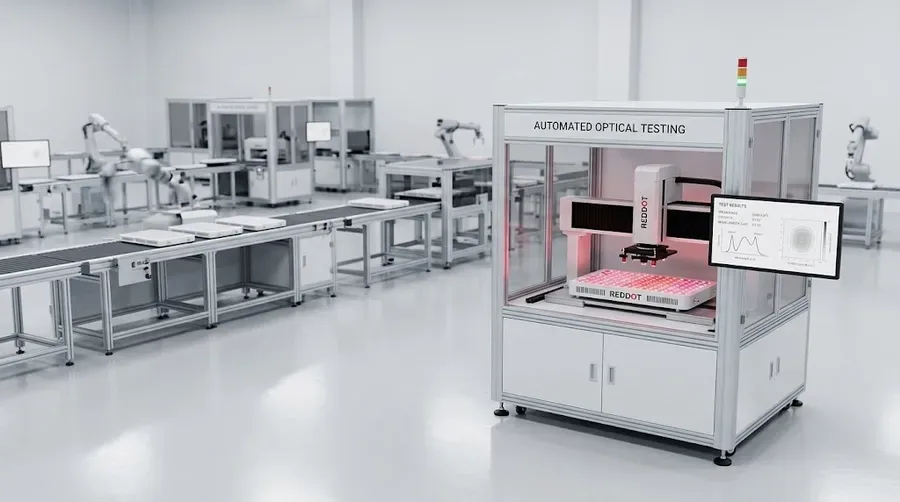
B2B buyers, clinic owners, and distributors often select suppliers based solely on the lowest unit price or the most attractive private-label catalog, assuming all factories offer similar post-sale support. The photobiomodulation industry is flooded with temporary trading companies and small assemblers who lack R&D infrastructure. When these suppliers disappear or face regulatory shutdowns, buyers are left with orphaned equipment, no replacement parts, and zero technical support.
How do you verify if a manufacturer will exist in five years? Audit their physical infrastructure, patent portfolio, and global compliance capabilities. Genuine manufacturing stability requires continuous capital investment. In 2024, REDDOT LED expanded by adding a 5,000 m² production facility, establishing a Thailand manufacturing base, and securing 70+ granted patents. This level of infrastructure protects buyers against supply chain disruptions.
Why does OEM/ODM capability matter if I only want to buy existing models? A factory capable of handling optical engineering, firmware development, and certification assistance across 80 countries demonstrates deep technical competence. OEM/ODM capabilities covering optical engineering, firmware development, and certification assistance indicate a partner invested in transforming scientific research into compliant products, rather than a vendor merely slapping logos on generic panels. Whether supplying a 9W, 76g aluminum alloy flashlight for localized care or large-scale clinical arrays, engineering depth helps maintain consistent batch quality.
A supplier’s ability to engineer custom solutions proves they understand the science behind the hardware.
Translating engineering standards into real-world clinical performance
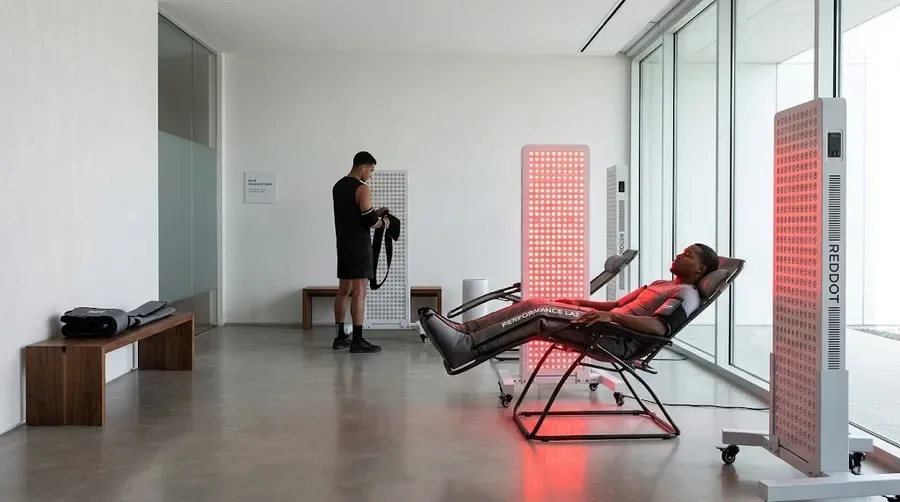
Do laboratory spec sheets guarantee how a device will perform in my clinic or gym? No. Spec sheets are measured under ideal conditions: fixed distances, controlled ambient temperatures, and zero interference. In reality, mounting heights, room heat, and treatment protocols alter actual photon delivery. A panel that looks perfect on paper may be optically unsuited for its intended application. When evaluating what to look for in red light therapy equipment, buyers often mistake a static number for a dynamic outcome. The biological mechanism of photobiomodulation is universal, but the hardware delivering it varies drastically in engineering quality and consistency.
Hardware claims require validation against physical case studies. Supplying FDA-cleared, multi-wavelength panels with customized mounting brackets to a California sports recovery studio reduced client treatment times by 50%. That reduction did not come from simply adding more LEDs. It came from tailoring the optical design and physical installation so the irradiance reached the target tissue at the correct intensity without requiring clients to sit still for extended periods. Engineered hardware directly impacts clinical throughput.
What specs are needed for red light therapy when targeting joint and muscle pain? Matching the device form factor to the anatomical area matters more than chasing maximum power output. Flat panels work well for broad surface areas, but joints require consistent contact to prevent photon scatter. A flexible therapy mat like the YD007 Red Light Therapy Mat uses 945 LED beads arranged in a 660nm to 850nm ratio of 4:1. This specific ratio prioritizes deeper tissue penetration, while the 160×60 cm dimensions allow full-body coverage without repositioning during a session. For highly localized needs, compact tools such as a 76g aluminum alloy therapy flashlight concentrate 9W across three distinct wavelengths (630nm, 660nm, 850nm) into an 11.9×2.5 cm body, making precise spot treatment practical outside a clinical setting.
A specification sheet describes potential. Physical engineering determines whether that potential reaches the patient. Understanding this gap between lab data and daily use shapes every subsequent purchasing decision.
Key Takeaways
Reliable red light therapy equipment requires verified irradiance output, typically at least 30 mW/cm² at the stated treatment distance, combined with precise 660 nm and 850 nm wavelengths delivered through proper thermal management. Buyers evaluating devices for clinical or commercial use should prioritize manufacturers operating under ISO 13485 quality management systems and holding relevant market access certifications like FDA registration or IEC 60601-1 electrical safety clearance. Understanding these engineering and compliance fundamentals protects both the end user and the brand distributing the technology.
Frequently Asked Questions
How to tell if a red light therapy device is good?
A high-quality red light therapy device delivers verified irradiance at the specified treatment distance, maintains accurate wavelength output, and operates under recognized safety standards. Look for manufacturers that hold ISO 13485 certification, which governs medical device quality management systems per the International Organization for Standardization. Devices meeting IEC 60601-1 electrical safety requirements demonstrate that the manufacturer prioritized engineering rigor over basic assembly. Consistent batch-to-batch performance, backed by optical test reports rather than marketing claims, separates professional-grade hardware from generic alternatives.
How to pick a good red light therapy device?
Selecting the right device depends on matching the hardware’s optical output to your specific application, whether that involves targeted localized treatment or full-body coverage. Verify that the manufacturer provides documented irradiance data measured at standard distances, such as 6 inches or 15 cm, rather than relying solely on total wattage or LED count. Check for required regulatory clearances for your target market, such as CE and UKCA for Europe, ETL for North America, or TGA registration for Australia. Manufacturers offering OEM or ODM support can also tailor lens angles, control interfaces, and form factors to fit distinct clinical or wellness environments.
Do the inexpensive red light therapy devices work?
Low-cost red light therapy devices often lack the optical engineering required to deliver therapeutic doses of light consistently. While they may emit visible red light, many budget units fail to maintain stable irradiance levels or accurate 660 nm and 850 nm wavelengths due to poor LED binning and inadequate thermal management. Without proper heat dissipation, LEDs degrade faster, shifting their wavelength output and reducing efficacy within months. Peer-reviewed photobiomodulation research establishes that biological responses depend on precise dosimetry, meaning underpowered or poorly calibrated devices simply cannot deliver the energy density required for measurable cellular effects.
What is the most reputable red light therapy device?
Reputation in this industry belongs to manufacturers who back their hardware with verifiable regulatory clearances and transparent engineering data rather than marketing narratives. Reputable suppliers hold applicable certifications such as FDA establishment registration, MDSAP compliance, and IEC 60601-1 safety testing. Companies like REDDOT LED, operating since 2010 with over 70 patents and manufacturing facilities certified to ISO 13485, represent the tier of B2B partners that supply global brands with compliant, tested equipment. The most trustworthy choice always aligns with a manufacturer willing to provide third-party test reports and ongoing technical documentation for your specific market.
References & Sources
- International Organization for Standardization (ISO). “ISO 13485: Medical devices — Quality management systems.”
- International Electrotechnical Commission (IEC). “IEC 60601-1: Medical electrical equipment safety standards.”
- U.S. Food and Drug Administration (FDA). “Medical Device Registration and Listing.”
- Wikipedia. “Photobiomodulation.”
- Therapeutic Goods Administration (TGA). “Australian Register of Therapeutic Goods (ARTG).”
Related Guides
A clinical distributor supplying sports recovery centers across North and South America needed high-power, whole-body panels controllable via smart apps. The primary concern was hardware damage during international transit and the frustration end-users face assembling complex devices. By pairing medical-grade whole-body panels with durable protective packaging and plug-and-play hardware design, the delivery achieved a zero-damage rate. End-user setup time dropped to just a few minutes, allowing clinics to deploy the units immediately. This scenario illustrates why evaluating what specs are needed for red light therapy extends beyond raw output power. It encompasses thermal management, structural engineering, and logistical planning.