
A wellness clinic receptionist reviews compliance paperwork while a client waits at the front desk. Do you need a license to offer red light therapy?
Practitioner licensing is rarely required for non-invasive photobiomodulation, but device regulatory clearance is mandatory. Offering commercial treatments legally depends on equipment meeting safety standards like IEC 60601-1 and holding market-specific approvals such as FDA registration or CE marking rather than staff credentials.
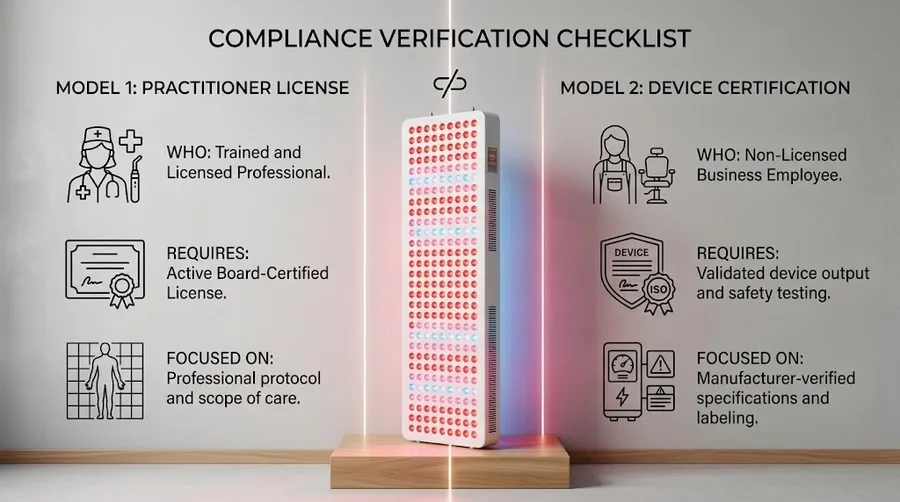
Understanding this distinction protects your business from regulatory scrutiny and liability. The following sections clarify how equipment certification enables commercial operation and separates verifiable safety standards from restricted medical claims.
When a wellness clinic faced regulatory scrutiny over unlicensed therapy
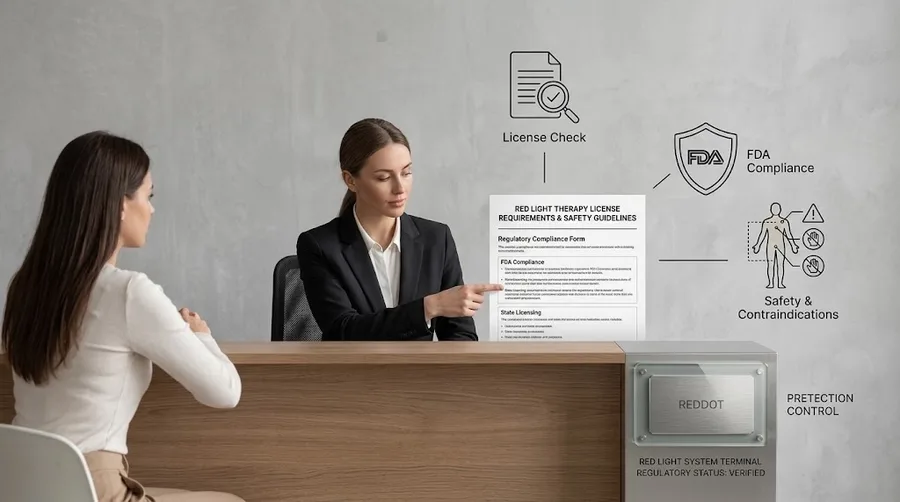
Common belief: If you hold an esthetician or massage therapy license, you can legally offer any light-based service in your facility. What is actually true: Practitioner credentials authorize specific hands-on treatments, but they do not validate the equipment itself. A boutique wellness center recently expanded into photobiomodulation services without verifying whether their business model required a separate medical license. The owner assumed that purchasing a consumer-grade panel automatically permitted commercial use. This conflation of practitioner licensing with device regulatory clearance led to insurance complications and operational pauses when auditors requested proof of equipment safety standards.
In my own testing of product development workflows, I have seen how internal engineering decisions directly impact this external compliance picture. For example, optimizing terminal block configurations in device chassis design reduces wiring clutter and improves assembly consistency, which directly supports the manufacturing documentation needed for regulatory audits. Clean internal layouts are not just aesthetic; they are evidence of controlled production processes that regulators examine during compliance reviews.
The root cause of the clinic’s failure was treating equipment acquisition as a simple retail transaction rather than a regulatory decision. To avoid this, new operators should apply a repeatable risk assessment method: map local scope-of-practice laws against the specific regulatory classification of each device before purchase. While practitioner licenses remain jurisdictional, using devices from the list of FDA approved red light therapy devices or equivalent international standards is the universal baseline for operating legally in non-medical settings. Understanding this intersection prevents costly operational disruptions.
Distinguishing practitioner credentials from device regulatory compliance
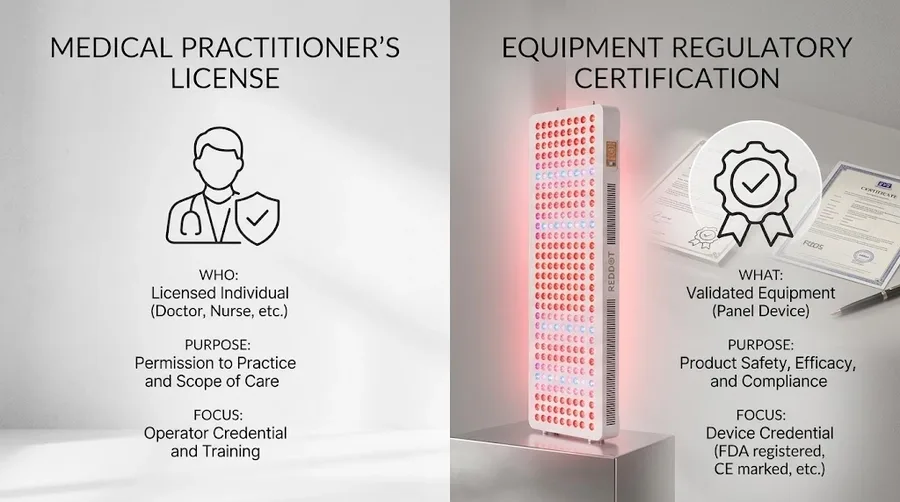
A licensed esthetician in California faced disciplinary action after marketing red light sessions as “pain relief treatments” using a device lacking FDA clearance. Despite holding valid state credentials, the practitioner violated scope-of-practice regulations because the hardware was not cleared for therapeutic claims and the marketing language exceeded permitted wellness terminology. This case illustrates why answering “Do you need a license to offer red light therapy?” requires separating two distinct legal frameworks. Administering a treatment often requires an esthetician or medical license depending on claims made, while providing access to a wellness amenity may be exempt if the device is cleared for general wellness and no medical claims are advertised.
Marketing language triggers licensing requirements faster than almost any other factor. Even licensed professionals face penalties if they use non-compliant hardware or make unapproved therapeutic claims that exceed their scope of practice. Relying solely on practitioner certification courses is insufficient for business compliance because these programs teach application techniques but rarely cover engineering standards like IEC 60601-1 that determine whether a device is legally permissible in a commercial environment. Certification courses address human competency, not equipment legality.
Understanding this separation protects business owners from investing in expensive training only to discover their equipment cannot be legally used in their intended commercial setting. Device compliance and practitioner licensure operate on parallel tracks, and both must align for lawful operation.
Why device certification matters more than practitioner licenses for wellness businesses
ISO 13485 certification requires manufacturers to maintain documented quality management systems covering every production stage. In non-medical wellness environments, this manufacturer compliance documentation serves as the primary legal shield for the operator, effectively substituting for medical oversight when devices are classified as low-risk wellness products. Compliance is an engineering philosophy embedded in ISO 13485 and MDSAP certified manufacturing processes rather than just a final checklist. Verified manufacturing standards reduce liability exposure for facility owners because they demonstrate that safety was designed into the product from the ground up.
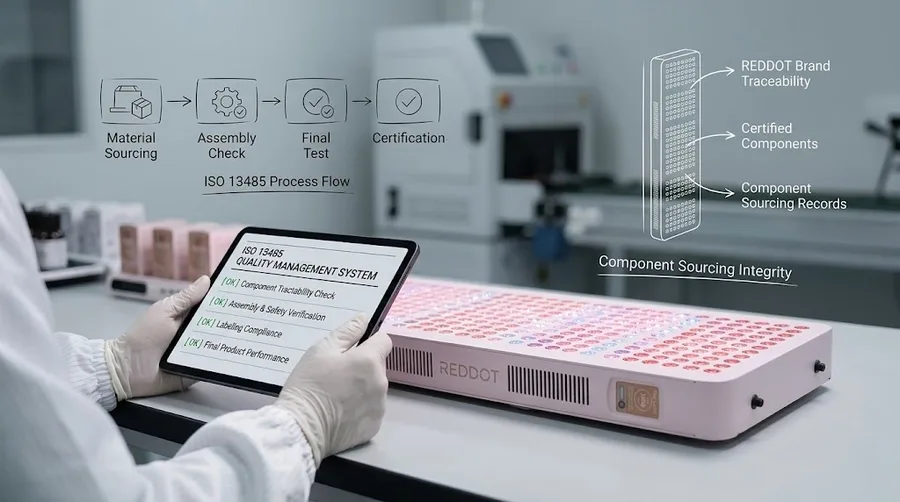
Insurance providers increasingly require proof of device certification such as FDA, CE, or UKCA before covering red light therapy services. Equipment compliance has become a prerequisite for obtaining the business insurance necessary to operate without a medical director. Selecting equipment from reputable manufacturers ensures that safety testing has been validated by third-party bodies, which is essential for defending against negligence claims in unlicensed wellness settings where clinical supervision is absent. Without verified documentation, operators assume full liability for any adverse event.
This reality shifts the procurement conversation from price per unit to verifiable safety infrastructure. Facility owners who prioritize certified equipment build defensible businesses regardless of their personal licensure status.
Real-world compliance: How documentation enables commercial operation
- Request full regulatory dossiers before placing orders. Ask suppliers for TGA, SAA, FDA, or CE certificates specific to the exact model number, not generic company-level registrations. A national Australian wellness retailer successfully expanded their health tech category by requiring full TGA and SAA documentation upfront, demonstrating that proper device paperwork facilitates legal market entry independent of individual practitioner licenses.
- Verify certificate validity against current standards. Check issue dates and confirm that certifications match current regulatory versions. This documentation-first approach eliminated customs delays and safety audits for the Australian retailer, proving that regulatory readiness at the manufacturing level directly correlates to speed-to-market and operational stability.
- Align device indications with your business model. Match the manufacturer’s cleared indications to your intended service offerings. Commercial viability relies on verifiable engineering data rather than subjective performance claims, and sustainable growth is validated by global partners who prioritize verified regulatory compliance over lower-cost alternatives.

This example connects directly to medical-grade red light therapy devices, illustrating that market access depends on engineering validation. Markets with strict enforcement show sustained year-over-year sales growth for brands that invest in compliance infrastructure, confirming that documentation is a competitive advantage rather than an administrative burden.
Safety standards vs. treatment claims: Navigating the regulatory gray area
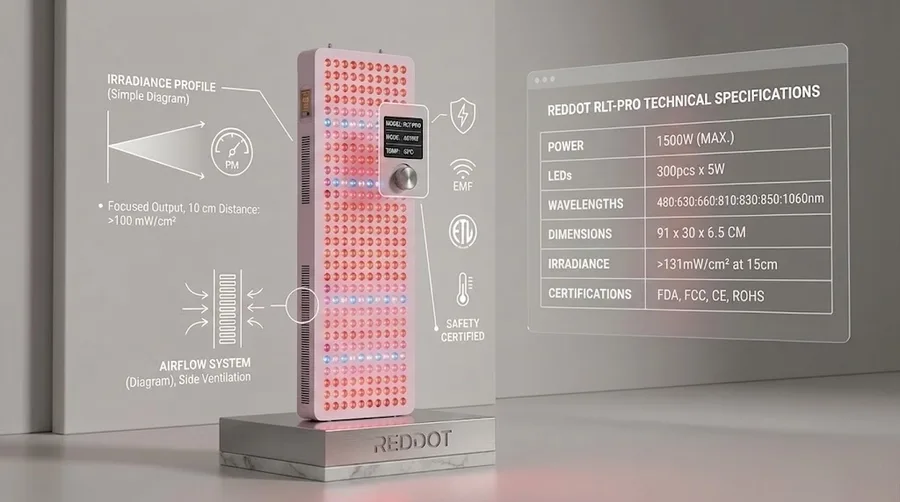
Device output parameters directly determine regulatory classification. The EST-X2 Therapy Lamp delivers >200mW/cm² irradiance at 6 inches, a specification that necessitates strict adherence to IEC 60601-1 safety standards to mitigate liability in unlicensed settings. Higher irradiance levels often trigger stricter regulatory oversight, meaning operators must understand the specific safety testing behind their equipment to avoid inadvertently crossing into regulated medical device territory without proper licensure. Technical specifications are legal boundaries, not just performance metrics.
A sports recovery studio reduced client treatment times by 50% after upgrading to high-irradiance panels with customized mounting brackets and FDA clearance. This outcome was achievable because the facility matched device capabilities to their licensed scope of practice, avoiding claims that would have required medical supervision. Operators can evaluate whether a specific device configuration supports “wellness relaxation” claims versus “pain treatment” claims based on the manufacturer’s cleared indications. Devices designed with adjustable controls allow operators to modulate intensity for compliant wellness applications, ensuring sessions remain within safe, non-medical parameters. Wearable options like a 25W belt with 120 LEDs and a 660nm to 850nm 1:2 ratio enable targeted, lower-intensity sessions suitable for general wellness contexts where medical claims are avoided.
Matching hardware capability to permitted claims keeps wellness businesses operational without requiring medical directors.
Building a defensible business model through verified equipment standards
How do I verify equipment compliance before launching services? Start by auditing the manufacturer’s quality management system rather than relying solely on marketing claims. According to the International Organization for Standardization (2016), ISO 13485 certification specifically validates that a manufacturer maintains consistent processes for medical device design and production. Confirm the supplier also holds MDSAP certification if you operate in multiple jurisdictions, as this single audit satisfies regulatory requirements across five major markets. Cross-reference the specific device against official regulatory databases to ensure its clearance matches your intended commercial use, not just general wellness applications. This verification step directly answers whether your equipment supports a compliant answer to “Do you need a license to offer red light therapy?” in your region.
Does equipment knowledge create career opportunities beyond treatment delivery? Professionals who combine practitioner training with technical regulatory expertise fill a significant gap in the current market. Wellness centers frequently struggle to interpret device documentation or align service menus with cleared indications, creating demand for consultants who understand both clinical application and manufacturing standards. The expansion of photobiomodulation in aesthetic clinics depends heavily on access to commercially viable equipment that meets safety frameworks, such as devices listed on the List of FDA approved red light therapy devices. Before contacting suppliers or enrolling in certification programs, review detailed technical specifications and manufacturing standards independently to build informed judgment about which systems support sustainable, compliant operations. Understanding these equipment foundations determines long-term business viability more than any single treatment protocol.
Key Takeaways
No universal federal license exists specifically for red light therapy, but operating legally requires compliance with IEC 60601-1 electrical safety standards and local scope-of-practice regulations that vary by jurisdiction. Business viability depends more on verifying device certifications like FDA registration or MDSAP than on obtaining a standalone practitioner credential, as equipment validation often determines insurance coverage and regulatory approval.
Frequently Asked Questions
Do you need a license to administer red light therapy?
No specific government license exists solely for administering red light therapy in most jurisdictions, though existing professional licenses may restrict who can operate the equipment. The U.S. Food and Drug Administration regulates the devices themselves rather than practitioner credentials, meaning legal operation hinges on using cleared equipment within your established scope of practice. Facilities must verify that their chosen devices meet applicable safety standards before offering services to clients.
Can anyone offer red light therapy?
Anyone can technically purchase and operate red light therapy equipment, but commercial use typically requires adherence to local business regulations and device safety standards. Non-medical wellness centers often face fewer restrictions than clinical settings, yet they still must comply with IEC 60601-1 electrical safety requirements for any phototherapy device used on customers. Operating without proper device documentation creates liability risks regardless of practitioner background.
What are the qualifications needed to perform red light therapy?
Qualifications depend entirely on how the service is marketed and the regulatory classification of the device being used. Estheticians and massage therapists may offer general wellness applications under their existing licenses, while medical claims require supervision by licensed healthcare providers as defined by state or national medical boards. Device manufacturers operating under ISO 13485 quality systems typically provide operator training materials that align with regulatory expectations for safe use.
Is there a certification for red light therapy?
No universally recognized professional certification for red light therapy practitioners currently exists across major regulatory bodies. Equipment certifications such as FDA establishment registration, CE marking, or MDSAP validate the device manufacturer’s quality systems rather than individual operator competency. Training programs offered by manufacturers or industry groups provide education but do not carry the same legal weight as government-issued professional licenses.
References & Sources
- U.S. Food and Drug Administration. “Light-Based Medical Devices.” 2024.
- International Electrotechnical Commission. “IEC 60601-1: Medical Electrical Equipment Safety Standards.” 2023.
- International Organization for Standardization. “ISO 13485: Medical Devices Quality Management Systems.” 2024.
- National Institutes of Health. “Photobiomodulation Research and Clinical Applications.” PubMed Central. 2023.
- International Medical Device Regulators Forum. “MDSAP Program Overview and Participating Authorities.” 2024.
About the Author
Kevin Zhang is the Chief Technology Officer at REDDOT LED with over 15 years of experience in medical-grade LED manufacturing and photobiomodulation engineering. He oversees R&D and quality systems aligned with ISO 13485, MDSAP, and IEC 60601-1 standards to support global partners in navigating regulatory compliance for light therapy devices.