
Yes, near-infrared light therapy can be overused, particularly when exposure exceeds the device-specific protocol or causes excessive heat or discomfort. PBM research has described biphasic dose-response behavior, meaning that increasing optical exposure does not necessarily produce proportionally greater biological effects. However, there is no single universal overdose threshold that applies to every wavelength, device, tissue, or application.
Understanding these boundaries lets you evaluate any device against actual output data rather than marketing claims. You will learn to calculate safe treatment times and spot the physical signs that indicate your sessions have crossed the therapeutic threshold.
A sports recovery clinic pushed session times too far: what went wrong
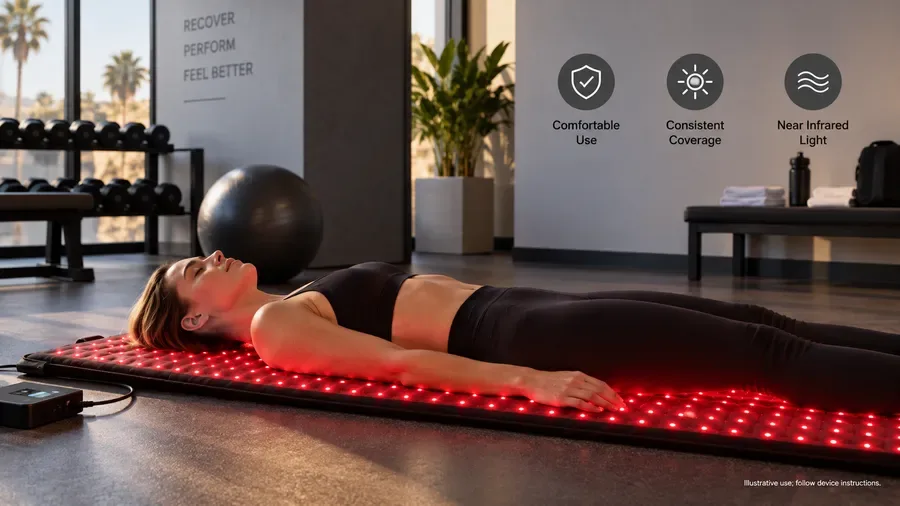
A California sports recovery studio assumed that longer exposure to near-infrared (NIR) light would accelerate muscle repair for their athletes. They extended sessions to 40 minutes using high-output panels. The result contradicted their expectations. Clients reported unexpected skin tightness, mild fatigue, and diminished returns in post-workout recovery metrics. The clinic’s technical team had to investigate why the benefits of red light therapy disappeared when they simply added more time.
This incident frames the exact question practitioners need answered: can you overdo near infrared light therapy? The answer is yes, and the mechanism is biological rather than mechanical. Pushing past the therapeutic window does not compound results. It reverses them.
The narrative arc here moves from this specific failure into the cellular mechanics that caused it, then examines how optical engineering prevents it at the hardware level. Finally, we will establish a repeatable dosimetry method any clinic or home user can apply to calculate safe exposure limits. Understanding where the threshold lies separates effective treatment protocols from counterproductive ones.
The studio eventually corrected their protocol by recalculating energy density against their panel’s output specifications. Treatment times dropped significantly while client outcomes improved. This correction required no new equipment, only an accurate understanding of photobiomodulation dosimetry.
Recognizing the boundary between stimulation and inhibition is the first requirement for anyone operating light therapy devices professionally.
The cellular mechanics of photobiomodulation overdose

Red light therapy works through photobiomodulation. At the mitochondrial level, photons in the 660nm and 850nm wavelengths are absorbed by cytochrome c oxidase (CCO), an enzyme responsible for cellular respiration. This absorption stimulates adenosine triphosphate (ATP) production, providing cells with usable energy. But this process obeys strict physical limits.
Research documented in the Journal of Biophotonics describes this limit through the biphasic dose response, often called the Arndt-Schulz curve. Moderate energy density yields measurable cellular benefits. Excessive joules per square centimeter actively inhibit cellular function. The same photon that builds ATP at a controlled dose destroys mitochondrial efficiency when delivered in surplus.
According to research published in Lasers in Medical Science (Springer), prolonged NIR exposure oversaturates CCO. Once saturated, the enzyme cannot process additional photons productively. Instead, uncontrolled accumulation of reactive oxygen species (ROS) occurs, triggering mitochondrial stress. Overdoing NIR therapy is a measurable biological threshold where photobiomodulation transitions from stimulatory to inhibitory.
Why NIR Exposure Still Requires Device-Specific Dose Control
Visible 660nm red light penetrates superficially. The 850nm NIR wavelength travels much deeper into tissue, reaching muscle and joint structures. Because users cannot feel NIR light the way they feel heat from visible sources, internal dosimetry becomes difficult to gauge by sensation alone. Energy accumulates faster and deeper than surface perception suggests.
Consensus guidelines published in Photobiomodulation, Photomedicine, and Laser Surgery outline specific safe joules-per-square-centimeter limits calculated for 850nm wavelengths to prevent this exact accumulation problem. These limits exist because the margin between therapeutic and inhibitory doses narrows significantly at deeper tissue levels.
Facial applications demand particular caution. Thinner facial tissues reach the inhibitory ROS threshold much faster than thicker muscle groups. Devices like the SD-008 Shaping Mask address this by distributing 690 light beads across a 25.4×20.32×11.9 cm surface area, keeping localized irradiance low enough for safe daily facial use without risking oversaturation.
Knowing the cellular mechanics explains why hardware design matters as much as biology.
How medical-grade device engineering inherently prevents overexposure
IEC 60601-2-57 compliance mandates strict irradiance limits, emission duration controls, and thermal safety requirements for non-laser therapeutic light sources. This standard dictates that preventing users from exceeding safe doses requires precise optical engineering built directly into the circuit board. Warning labels about time limits do not stop ROS accumulation. Hardware architecture does.
Drawing on Kevin Zhang’s 15+ years of experience developing clinically oriented solutions under these standards at REDDOT LED, the approach treats compliance as a core engineering philosophy rather than a checklist. The company’s 17-member R&D team holds 70+ granted patents related to LED light therapy technologies, representing foundational research into exact dosimetry thresholds engineered directly into the hardware.
Internal component optimization plays a direct role in maintaining safe output. When I worked with the chassis designs for our BIOMAX and RDPRO products, especially the RD series, we initially used a mix of 2-pin and 4-pin terminal blocks. As features like independent blue light control were added, the number of terminal blocks increased to four or five, resulting in a cluttered wiring layout inside the chassis. We proposed consolidating the wiring by replacing two 2-pin terminal blocks with a single 4-pin terminal block wherever the design allowed. This simplification leads to a much cleaner and centralized wiring distribution. A tidier internal layout ensures stable current delivery to LEDs, preventing power fluctuations that could inadvertently spike irradiance beyond safe limits during a timed session.
Calibrating irradiance, wavelength ratios, and pulse frequency
High-output devices require engineered beam control. The EST-X2 Therapy Lamp delivers >200mW/cm² irradiance at 6 inches using 60 x 5W LEDs. Without its 30-degree and 60-degree lens options, this intensity could cause localized tissue overdosing during extended sessions. The lenses shape the beam to distribute energy safely.
Lower-intensity devices manage risk differently. The T1 Desktop Panel uses 120pcs x 1W LEDs at a strict 660nm:850nm=1:1 ratio to deliver a calibrated 35mW/cm² at 15cm. This specification makes it suitable for close-range daily use where overexposure risk is mitigated by precise power limitation.
Pulsing introduces another variable. Red light therapy frequency Hz modulates biological response by giving cells recovery time between light pulses. Portable units like the H001 Red Light Therapy Flashlight pack 3PCS 3W (630/660/850) LED chips into a 76g aluminum body, allowing targeted spot treatments where total energy delivery remains naturally constrained by the small application area.
Engineering safeguards make mathematical dosimetry possible for end users.
Calculating your safe dosage: a repeatable method for any device
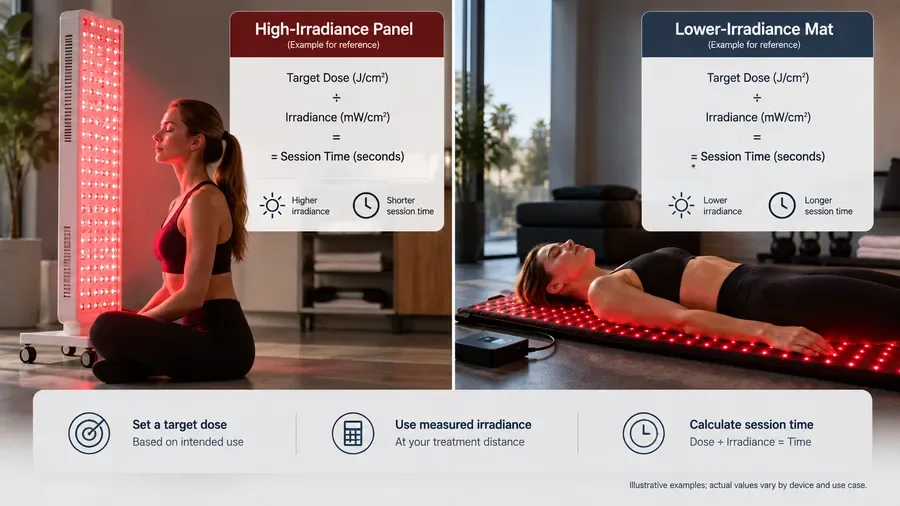
The California clinic scenario translates into a practical framework using official dosage recommendations from the World Association for Photobiomodulation Therapy (WALT). WALT provides maximum session durations and frequencies based on tissue depth and condition.
The basic dosimetry formula is straightforward: Energy Density (J/cm²) = Irradiance (mW/cm²) × Time (seconds) / 1000. This equation lets operators calculate exactly how long they can safely run a specific device before hitting the inhibitory threshold. Understanding distance is only one spatial variable. Temporal duration and cumulative energy parameters dictate whether you exceed safe limits regardless of how far away the panel sits.
Is daily use of red light therapy safe? That depends entirely on whether the cumulative daily joules remain below the biphasic peak established by WALT and peer-reviewed dosimetry guidelines. Daily stacking of sub-optimal doses can still push total weekly energy past the therapeutic window.
Applying the method to full-body and targeted treatments
Consider a full-body application using a therapy mat equipped with 945pcs LEDs at 75W and a 4:1 ratio of 660nm to 850nm. A 9-gear timer control spanning 10 to 90 minutes allows users to match session length precisely to their chosen intensity gear (P1-P5). Running the mat at maximum intensity for the maximum time would mathematically exceed safe joules for superficial tissues. Matching the timer to the intensity gear prevents accidental excess NIR energy accumulation.
Returning to the California sports recovery studio, REDDOT engineers helped transition their setup to high-irradiance panels with optimized optics. By calculating the exact joules required for muscle recovery, they reduced client treatment times by 50%. The athletes received the identical therapeutic dose in half the time, effectively eliminating the risk of overdoing exposure.
How often should you use red light therapy depends on tissue type. Acute muscle recovery typically tolerates higher energy densities less frequently, while chronic joint inflammation responds better to lower, consistent doses spread across multiple sessions. Frequency must pair with correct per-session energy density to stay within the therapeutic window.
Mathematical precision replaces guesswork, but physical symptoms still provide necessary feedback.
Recognizing the signs that you have exceeded the therapeutic window
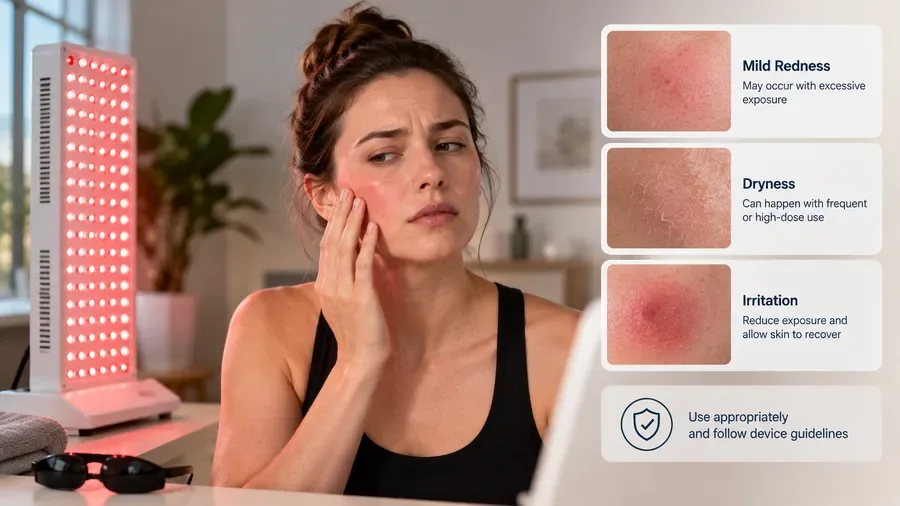
Exceeding the biphasic dose peak causes a paradoxical increase in muscle soreness rather than accelerated recovery. What are the signs of doing too much red light therapy? Look for specific physiological indicators: unexpected lethargy, transient skin erythema, or a sudden plateau in healing progress after weeks of consistent improvement. These signals indicate the Arndt-Schulz curve has tipped from stimulation into inhibition.
Practitioners must distinguish between a normal Herxheimer-like detoxification response and genuine photobiomodulation overdose. A temporary, mild detox reaction usually resolves quickly without intervention. Genuine overdose caused by ROS accumulation persists and worsens with continued exposure. Building independent judgment about these symptoms prevents unnecessary panic while catching actual dosimetry errors early.
Can too much infrared light be harmful? Near-infrared radiation does not carry the DNA-damaging risks associated with ultraviolet exposure. However, chronic overexposure still causes oxidative stress that degrades cellular health over time. The damage is metabolic rather than genetic, but it remains counterproductive to therapeutic goals.
If B2B partners, wellness brands, or informed consumers observe these signs in themselves or their clients, the solution is rarely to abandon therapy. Recalculate dosimetry using the engineering and mathematical principles outlined above. Request certified output data from the device manufacturer to verify actual irradiance matches advertised specifications. Accurate baseline numbers make accurate dose adjustments possible.
Correcting an overdose requires adjusting the math, not discarding the technology.
Key Takeaways
Yes, you can overdo near infrared light therapy because cells follow a biphasic dose response where exceeding the optimal energy window—typically 4 to 10 J/cm² for photobiomodulation—reverses therapeutic benefits and inhibits cellular function. Keeping individual sessions between 10 and 20 minutes at the manufacturer’s recommended distance prevents this inhibitory effect while protecting tissue from unnecessary thermal stress. Understanding this biological ceiling helps users avoid the common mistake of assuming that more light automatically produces faster recovery.
Frequently Asked Questions
What happens if you do red light therapy too often?
Doing red light therapy too often pushes cells past the peak of the biphasic dose response curve, causing cellular inhibition rather than stimulation. Peer-reviewed research in photobiomodulation consistently shows that once tissues absorb beyond their optimal energy threshold, the biological benefits diminish or reverse entirely. Daily use is generally acceptable when total weekly dosage stays within established limits, but applying high-irradiance light multiple times a day risks overwhelming mitochondrial activity. REDDOT LED engineers account for this biological limit when calibrating devices to ensure output remains within safe operational boundaries.
How often can I use near infrared light therapy?
Most clinical protocols recommend using near infrared light therapy three to five times per week for general wellness and tissue recovery. This frequency allows cells to process the absorbed photons and complete the resulting metabolic cascade before receiving another dose. The exact schedule depends on the device’s irradiance; a panel delivering >200 mW/cm² at 6 inches requires shorter or less frequent sessions than one producing lower intensity. Consistency matters more than volume, as regular moderate dosing yields better long-term results than sporadic high-dose exposure.
Is 20 minutes too long for red light therapy?
A 20-minute session is appropriate for many home panels operating at standard irradiance levels, such as those delivering around 35 mW/cm² at 15 cm. However, 20 minutes becomes excessive when using high-output clinical equipment where the target tissue absorbs its optimal Joules per square centimeter much faster. The correct duration is always calculated by dividing the desired dose (in J/cm²) by the device’s irradiance (in mW/cm²). Checking the specific power density of your device prevents accidental overdosing during longer sessions.
Can too much infrared light be harmful?
Too much infrared light can cause localized thermal damage to skin and underlying tissues if the energy delivery exceeds the body’s ability to dissipate heat. While near-infrared wavelengths like 850 nm are non-ionizing and do not damage DNA, prolonged exposure at close range raises tissue temperature significantly. Safety standards such as IEC 60601-1 establish strict limits for medical electrical equipment to prevent these thermal injuries. Devices manufactured under ISO 13485 quality management systems undergo rigorous testing to ensure their optical and thermal outputs remain within these defined safety parameters.
References & Sources
- International Electrotechnical Commission (IEC). “IEC 60601-1: Medical Electrical Equipment – General Requirements for Basic Safety and Essential Performance.”
- International Organization for Standardization (ISO). “ISO 13485: Medical Devices – Quality Management Systems.”
- U.S. Food and Drug Administration (FDA). “Laser Products and Devices Guidance.”
- Hamblin, M.R. “Biphasic Dose Response in Low Level Light Therapy.” Dose-Response journal. 2011.
- World Association for Photobiomodulation Therapy (WALT). “Recommended Treatment Doses for Low-Level Laser Therapy.” 2010.