
By 2024, photobiomodulation research shifted from isolated cellular studies to controlled human trials. The old advice of standing under any red LED is now outdated. Can red light therapy help with sports recovery?
Yes. Red light therapy helps with sports recovery by delivering specific wavelengths—typically 660nm and 850nm—to muscle tissue. These photons stimulate mitochondrial ATP production, which reduces oxidative stress and accelerates the clearance of metabolic waste after intense exercise.
The gap between that mechanism and actual results usually comes down to device engineering. The sections below break down why wavelength ratios matter more than total LED count, how irradiance thresholds determine whether a session actually works, and what timing protocols athletes consistently get wrong. Understanding these variables lets you evaluate any panel or mat on its physics rather than its marketing claims.
Why most athletes misunderstand how red light therapy actually works
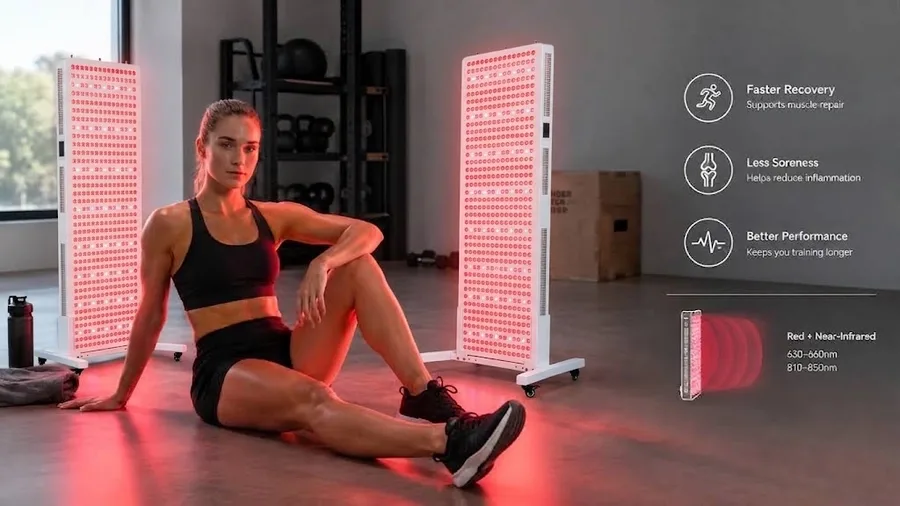
Many athletes assume that standing near any red LED source will accelerate muscle repair. This assumption leads to disappointment and fuels skepticism about whether red light for muscle recovery is genuinely effective. The problem is not the science. It is the engineering gap between a clinical tool and a consumer gadget. Kevin Zhang, Chief Technology Officer at REDDOT LED with over 15 years of experience in optical engineering and non-invasive therapeutics, approaches this field by translating scientific research into reliable, medical-grade products rather than decorative lighting.
Photobiomodulation (PBM) is a precise photochemical reaction. It requires specific photon densities to stimulate cellular function. It does not happen simply because a bulb glows red. Understanding this distinction is the first step in answering the core question: Can red light therapy help with sports recovery?
The International Olympic Committee Consensus Statements acknowledge non-invasive physical modalities like PBM in elite sports protocols. But they specify that these modalities must be applied with verified parameters. A device lacking accurate spectral output or stable irradiance cannot replicate the results documented in peer-reviewed literature. Marketing claims often ignore these requirements entirely. When buyers evaluate hardware based on LED count alone, they miss the optical design, thermal management, and component selection that determine actual tissue-level dosing. Recognizing why specifications matter more than marketing claims changes how teams select their equipment.
This distinction between surface-level glow and targeted energy delivery explains why wavelength selection dictates treatment outcomes.
The wavelength myth: why mixing 660nm and 850nm incorrectly limits muscle repair

A common belief in fitness circles is that “red is red” and any visible glow provides therapeutic benefits for exercise-induced muscle damage. Superficial 660nm light primarily targets skin and shallow capillaries. Reaching the muscle bellies where delayed onset muscle soreness (DOMS) originates requires 850nm near-infrared light. Research published in the European Journal of Applied Physiology details how 660nm and 850nm wavelengths interact differently with mitochondrial cytochrome c oxidase to drive ATP production and reduce oxidative stress. Without the correct ratio, the cellular cascade for muscle repair remains incomplete.
The World Association for Photobiomodulation Therapy (WALT) dosage guidelines establish strict wavelength parameters for musculoskeletal recovery. Cheap consumer panels frequently use arbitrary ratios that fail to meet these clinical thresholds. Precision matters here. The T1 Desktop Panel illustrates exact spectral engineering: its 120pcs x 1W LEDs deliver a strict 660nm:850nm = 1:1 ratio at 35mW/cm² irradiance at 15cm. Close-range localized recovery demands this level of control. Manufacturers who fail to bin their LEDs correctly during production end up delivering unpredictable spectral outputs, rendering clinical dosing impossible for the end user. Does red light therapy really help with recovery when the hardware cannot guarantee its own output?
How incorrect wavelength ratios affect different types of sports injuries
Treating red light therapy for muscle spasms requires deep-tissue penetration, which favors 850nm dominance. Superficial contusions or skin-level abrasions respond better to 660nm. Applying the wrong ratio to the wrong injury delays healing and wastes training time.
| Injury Type | Primary Wavelength Need | Target Tissue Depth |
|---|---|---|
| Muscle Spasms / Deep Strains | 850nm dominant | Deep muscle belly |
| Superficial Contusions | 660nm dominant | Skin and shallow capillaries |
| General Post-Workout Recovery | Balanced 1:1 ratio | Mixed tissue layers |
Matching the wavelength ratio to the specific tissue depth determines whether a session accelerates repair or merely generates heat. Selecting the right spectrum leads directly into understanding how much power that spectrum must deliver.
The irradiance trap: why weak devices waste your recovery window
Delivering less than 30 mW/cm² at the skin surface typically fails to trigger a measurable photobiomodulation response in deep muscle tissue. Many retail devices advertise total wattage rather than actual delivered irradiance, misleading consumers about the true power reaching their muscles. Longer sessions under dim lights do not equal better recovery. Biological systems follow the biphasic dose response, known as the Arndt-Schulz curve. Too little energy does nothing. Excessive energy can inhibit cellular function. The goal is hitting the therapeutic window efficiently.
Irradiance, measured in mW/cm², defines the density of photons arriving at the target tissue. High-output engineering solves the problem of wasted time. The EST-X2 Therapy Lamp delivers >200mW/cm² irradiance at 6 inches with a 660nm:850nm = 1:1 ratio and 30/60-degree lens options. Adjustable optics allow practitioners to concentrate photons for targeted sports recovery across larger muscle groups without extending session times unnecessarily. Similarly, the Sauna ONE Red Light Panel achieves >103mW/cm² at 6 inches using 320 x 3W LEDs and a 45-degree lens, demonstrating how professional-grade components maintain high irradiance safely for post-workout home gym use.
Thermal management and its hidden impact on consistent output
Poor thermal design causes LED junction temperatures to rise. This shift moves the emitted wavelength away from the optimal 660nm/850nm peaks and degrades irradiance mid-session. Athletes relying on uncooled devices may receive sub-therapeutic doses after just a few minutes.
When I worked with major clients facing post-shipment complaints regarding product quality, we discovered that inconsistent optical output was a primary culprit. We implemented a two-step quality control enhancement. First, we began creating and archiving detailed reports for customer-approved samples, including data on irradiance, temperature, parts lists, and packaging photos. Second, during mass production, we instituted a policy of randomly selecting 10% of the order quantity from the production line for re-testing to ensure consistency with the initial sample data. Catching issues before shipment prevents the scenario where one athlete’s device performs entirely differently from another’s despite looking identical. Knowing how power behaves under heat clarifies why timing those sessions is equally critical.
Timing and protocol mistakes that undermine athletic performance
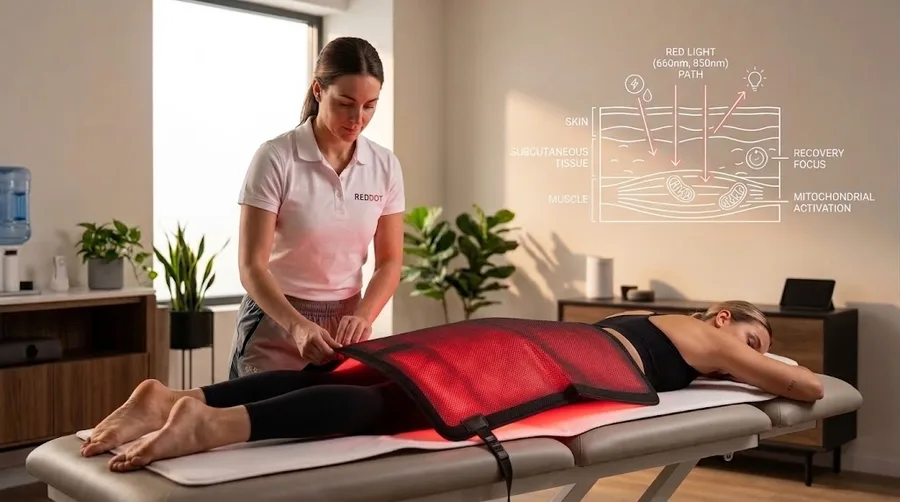
A popular trend involves applying red light therapy exclusively before workouts to “pre-condition” muscles. While pre-exercise application has some evidence for reducing initial damage markers, the primary physiological need for most athletes is accelerating clearance of metabolic waste and repairing micro-tears post-exercise. Findings referenced in the Journal of Athletic Training indicate that photobiomodulation affects DOMS and exercise-induced muscle damage most effectively when treatment timing aligns with the body’s inflammatory cascade.
Inconsistent dosing schedules compound this error. Cellular recovery relies on cumulative, predictable exposure rather than sporadic, overly long sessions. Programmable hardware becomes a necessity here. The YD007 Red Light Therapy Mat illustrates practical protocol adherence. Its 9-gear timer control (10–90 minutes) and 5 adjustable intensity gears (P1-P5) allow athletes to precisely match WALT dosage recommendations for full-body coverage (160x60cm) without manual guesswork. This makes it highly suitable for living room post-workout routines or professional clinic settings. Can red light therapy help with sports recovery if the user applies it at the wrong phase of inflammation?
Differentiating between acute injury and general fatigue protocols
Red light therapy for muscle injury involving acute trauma often requires higher irradiance focused on a smaller area for shorter durations. General systemic fatigue benefits from lower-intensity, full-body exposure over longer periods. Failing to distinguish between these two scenarios is a primary reason users conclude that the technology “doesn’t work” for them.
| Protocol Goal | Irradiance Level | Treatment Area | Session Duration |
|---|---|---|---|
| Acute Muscle Injury | High | Localized / Small | Shorter |
| Systemic Fatigue Recovery | Moderate to Low | Full Body | Longer |
Applying a systemic fatigue protocol to an acute tear dilutes the necessary energy density. Conversely, blasting a fatigued athlete with high-intensity localized light ignores the broader metabolic demand. Dialing in the protocol only protects the athlete if the hardware itself meets rigorous safety standards.
Overlooking safety standards: the hidden risk in commercial recovery studios

Because red light is non-ionizing and painless, many assume any device is inherently safe for daily, repeated athletic use. Electrical safety, flicker rates, and material biocompatibility are critical factors governed by strict international standards. IEC 60601-1 compliance for medical electrical equipment ensures devices can withstand the rigors of continuous operation in humid, high-use environments like locker rooms and recovery studios without posing shock or fire hazards. ISO 13485-certified manufacturing guarantees that the thermal management, power output consistency, and component longevity required for safe sports recovery are rigorously tested before deployment. Uncertified devices degrade rapidly under heavy athletic use.
Is a standard consumer light panel safe enough for a commercial recovery studio? No. Commercial environments demand continuous operation cycles that exceed consumer design limits. Devices engineered under ISO 13485 undergo multi-stage inspection and performance testing to maintain output stability over thousands of hours. Consumer units lack this validation, increasing both liability and failure rates.
How does certified engineering change actual treatment outcomes? Consider a California boutique recovery studio that needed high-irradiance panels to reduce client treatment times. REDDOT LED supplied FDA-cleared, multi-wavelength panels with customized mounting brackets. Because the devices were engineered to deliver precise irradiance reliably, the studio reduced client treatment times by 50% while maintaining strict safety margins. This outcome resulted directly from trusting verifiable engineering over generic consumer hardware.
During my own testing and production oversight, I observed that even minor manufacturing oversights, such as inadequate cable reinforcement leading to loose ribbon terminals, can cause intermittent power delivery. In a sports recovery context, this means an athlete might unknowingly receive half the prescribed dose due to a preventable assembly flaw. To address this, we applied glue to all ribbon cables in our inventory to reinforce the terminals, and required suppliers to secure all subsequent purchases of ribbon cables to their terminals with glue before shipment. This eliminated failures caused by detached cables. A perfectly timed protocol means nothing if the hardware fails to deliver the prescribed dose consistently.
Bridging the gap between clinical research and real-world device engineering
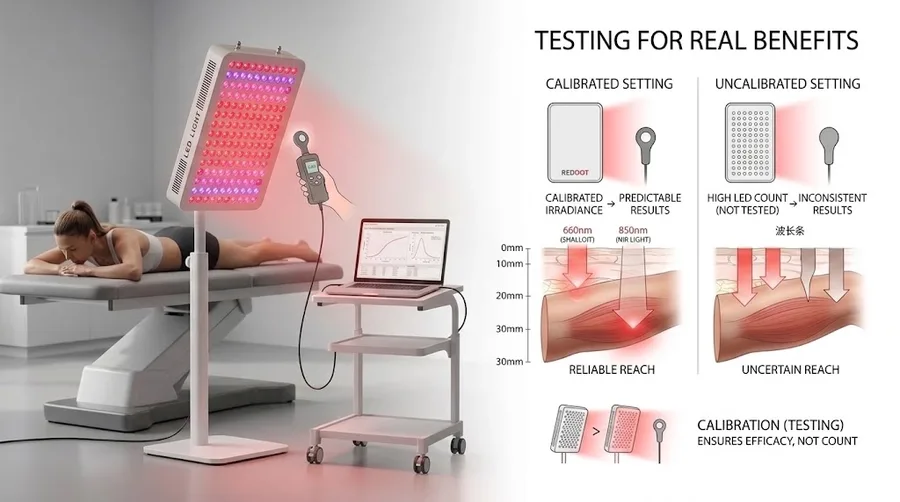
The question “can red light therapy help with sports recovery?” does not have a simple yes or no answer. The outcome depends entirely on whether the hardware delivers the correct wavelengths at the right irradiance, maintains stable thermal performance during use, and is built to rigorous safety standards. Peer-reviewed data remains theoretical without manufacturing excellence. Organizations like the World Association for Photobiomodulation Therapy (WALT) provide dosing frameworks, but optical engineering translates those frameworks into physical reality.
Does red light therapy really help with recovery if I just buy any panel online? A generic consumer panel rarely matches the output required for meaningful tissue penetration. Clinical protocols demand specific energy densities. A high-output device like the RDPRO1500 delivers >182mW/cm² at 15cm, providing the intensity necessary for targeted light delivery. Without verified spectral reports, buyers are guessing. Kevin Zhang, Chief Technology Officer at REDDOT LED, brings over 15 years of experience in optical engineering to this exact problem. His work focuses on translating scientific parameters into reliable, medical-grade products rather than chasing aesthetic trends.
How should a facility owner evaluate red light for muscle recovery equipment? Ignore influencer endorsements. Demand verifiable output data. Ask manufacturers for third-party irradiance maps, spectral analysis reports, and recognized safety certifications such as IEC 60601-1 or FDA clearance. Engineering capability determines whether a device performs consistently across thousands of sessions or degrades after a few months. For full-body applications, wavelength ratios matter significantly; devices offering adjustable 660nm to 850nm ratios allow practitioners to target different tissue depths precisely.
Most guides treat all photobiomodulation devices as interchangeable. The evidence points the other way. Optical precision and thermal management separate equipment that produces measurable physiological changes from expensive room lighting. Understanding how specific wavelengths target different tissues, and learning to calculate personalized dosing protocols, requires looking past marketing claims and examining the engineering underneath. This is why understanding device specifications matters before evaluating any recovery protocol.
Key Takeaways
Red light therapy supports sports recovery by delivering 660 nm and 850 nm wavelengths that stimulate mitochondrial ATP production in muscle tissue. Athletes and clinic operators should verify that a device delivers adequate irradiance, typically at least 30 mW/cm² at the stated distance, because insufficient power output produces no measurable biological effect regardless of session length.
Frequently Asked Questions
Can red light therapy help with athletic recovery?
Yes, red light therapy aids athletic recovery by using specific wavelengths, primarily 660 nm and 850 nm, to stimulate cytochrome c oxidase in mitochondria and increase cellular energy production. This process helps clear metabolic waste and reduces oxidative stress following intense physical exertion. Clinical distributors and sports recovery studios rely on devices built under medical-grade quality management systems like ISO 13485 to guarantee consistent optical output across treatment sessions.
When should you not do red light therapy?
You should avoid red light therapy if you have active photosensitive conditions, are taking photosensitizing medications, or have untreated malignant lesions. The IEC 60601-1 standard governs electrical safety for such medical equipment to prevent retinal or skin damage from poorly engineered devices. Consulting a physician before starting photobiomodulation is necessary for anyone with underlying health concerns or those who are pregnant.
Should I do red light therapy before or after exercise?
Applying red light therapy after exercise targets the inflammatory response and accelerates tissue repair when muscles need it most. Pre-workout application is also used by some athletes to prime cellular metabolism, but post-exercise use aligns directly with the body’s natural recovery cascade. Devices offering adjustable pulsing modes allow practitioners to tailor the light delivery protocol depending on whether the goal is preparation or repair.
How long should red light therapy be used for muscle recovery?
A typical session for muscle recovery lasts between 10 and 20 minutes per targeted area, depending on the device’s irradiance level. A panel delivering higher irradiance at close range requires less time to achieve the same total energy dose as a weaker unit placed further away. Manufacturers engineering these systems for professional sports clinics design them to deliver precise dosimetry within this window so users avoid under-dosing or overexposure.
References & Sources
- International Electrotechnical Commission (IEC). “IEC 60601-1: Medical Electrical Equipment Safety Standards.”
- U.S. Food and Drug Administration (FDA). “Medical Device Regulation and Guidance.”
- International Organization for Standardization (ISO). “ISO 13485: Medical Devices Quality Management Systems.”
- National Institutes of Health (NIH). “Photobiomodulation and Cellular Mechanisms.” PubMed database.
- Wikipedia. “Low-Level Laser Therapy.” Wikimedia Foundation.
About the Author
Kevin Zhang is the Chief Technology Officer at REDDOT LED, bringing over 15 years of experience in LED technology and photobiomodulation engineering. He directs research and manufacturing operations that operate under ISO 13485 and MDSAP quality management systems, supporting global brands with medical-grade red light therapy devices. His technical background spans optical design, firmware development, and international regulatory compliance, including FDA, TGA, CE, UKCA, and IEC 60601-1 standards.
Related Guides

Understanding whether red light for muscle recovery produces measurable results requires looking past marketing claims. Athletes often ask, “Does red light therapy really help with recovery?” The answer depends entirely on how the device delivers energy to the tissue. A full-body mat covering 160×60 cm operates differently than a targeted high-irradiance panel. The former suits passive rest periods at home, while the latter targets specific muscle groups after intense training.