
Assuming red light therapy is merely a wellness trend causes clinics to miss evidence-based pain management protocols. This misconception delays effective treatment integration and limits patient recovery options.
Do physical therapists use red light therapy? Yes, licensed practitioners apply photobiomodulation using specific wavelengths like 660 nm and 850 nm to stimulate cytochrome c oxidase, increasing ATP production for tissue repair and pain reduction in clinical rehabilitation settings.
Understanding the biological mechanism separates valid clinical applications from marketing hype. The following sections break down efficacy standards, safety compliance, and equipment specifications so you can evaluate phototherapy devices with confidence.
The biological mechanism behind clinical photobiomodulation adoption
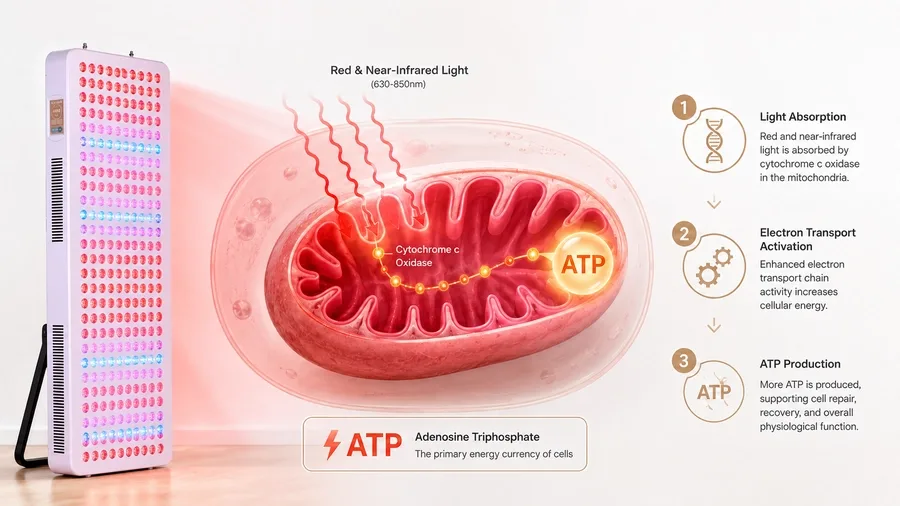
How does light actually stimulate tissue repair at the cellular level? Photobiomodulation begins when photons are absorbed by cytochrome c oxidase, a key enzyme in the mitochondrial respiratory chain. This absorption increases adenosine triphosphate (ATP) production and generates a transient burst of reactive oxygen species (ROS). Rather than causing damage, this controlled ROS signal activates transcription factors that promote tissue repair and reduce inflammation. Physical therapists distinguish this photochemical cascade from thermal modalities like ultrasound or diathermy because red light therapy modulates cell function without generating heat. Effective musculoskeletal rehabilitation relies on specific optical windows: 630–670nm wavelengths target superficial tissues, while 810–850nm penetrates deeper into muscle and joint structures. Clinicians must also respect the Arndt-Schulz law, which describes a biphasic dose-response curve where therapeutic benefits occur only within a precise energy density range; excessive doses can inhibit rather than stimulate cellular activity.
Differentiating clinical PBM from consumer wellness trends
Clinical photobiomodulation targets specific pathologies with localized protocols, unlike generalized whole-body wellness trends that prioritize broad exposure over precision. While early debates focused on laser coherence, current research supports LED arrays for treating larger surface areas safely in physical therapy settings. Professional devices operate within a defined therapeutic window of irradiance and wavelength accuracy that differs significantly from cosmetic skincare tools designed primarily for aesthetic maintenance. Understanding these biological parameters explains why clinicians ask “Do physical therapists use red light therapy?” with reference to dosimetry rather than general wellness claims.
Evidence-based applications for pain and tissue recovery
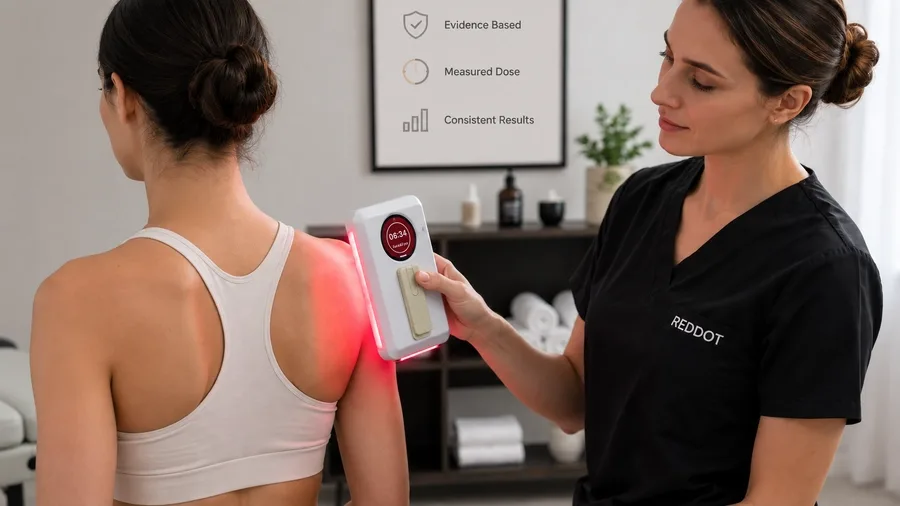
Common Belief: Red light therapy is a generic wellness trend with vague benefits for everything. What’s Actually True: Systematic reviews support specific applications for osteoarthritis, tendinopathy, and delayed onset muscle soreness (DOMS), with measurable outcomes in functional mobility and pain reduction. Evidence is strongest for knee osteoarthritis, while research on neuropathic pain and post-surgical edema remains emerging. A California sports recovery studio demonstrated real-world efficiency when customized high-irradiance panels reduced client treatment times by 50% without compromising safety. However, contraindications exist: active malignancy, pregnancy over the abdomen, photosensitivity disorders, and direct thyroid exposure require avoidance. Nociceptive pain responds differently than inflammatory pain, guiding wavelength selection. Near-infrared light modulates nerve conduction velocity for acute pain management, while red light supports chronic wound healing and collagen synthesis. Common orthopedic presentations like plantar fasciitis, rotator cuff impingement, and lateral epicondylitis show symptom improvement within predictable timelines when integrated into multimodal treatment plans.
Types of pain treated by red and NIR light therapy
Nociceptive pain arises from tissue damage and responds well to anti-inflammatory wavelengths, while neuropathic pain involves nerve dysfunction and requires different parameters. Physical therapists integrate light therapy for conditions including plantar fasciitis, rotator cuff impingement, and lateral epicondylitis, with expected improvement timelines ranging from two to six weeks depending on chronicity. Near-infrared wavelengths modulate nerve conduction velocity for acute pain relief, whereas visible red light promotes collagen synthesis essential for chronic wound healing and tendon remodeling. This specificity answers whether physical therapists use red light therapy as a targeted intervention rather than a blanket modality.
Clinical efficacy standards and equipment specifications
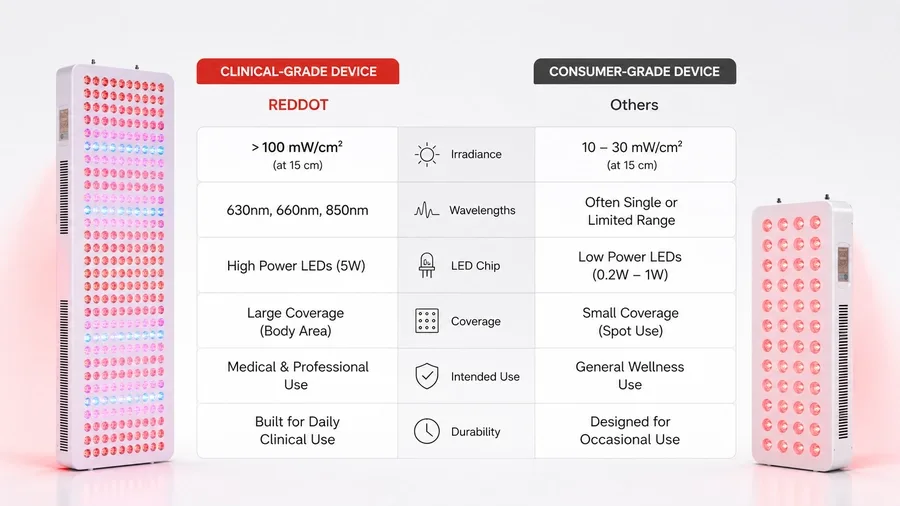
IEC 60601-1 compliance is non-negotiable for clinical photobiomodulation equipment. This electrical safety standard distinguishes medical-grade devices from consumer electronics and directly impacts liability protection in healthcare settings. Manufacturer-stated “at-diode” power differs significantly from clinically relevant “at-skin” irradiance; effective deep tissue treatment typically requires >200mW/cm² at treatment distance. The EST-X2 Therapy Lamp exemplifies engineering targets meeting physical therapist demands, delivering >200mW/cm² at 6 inches with a 660nm:850nm 1:1 ratio. Wavelength ratios guide clinical decisions: balanced 1:1 serves general rehabilitation, while higher NIR ratios address deeper joint pathology. Equipment design evolution also matters; earlier versions of certain therapy lamps featured stationary bases that hindered repositioning in busy clinics, but redesigns incorporating caster wheels now enable efficient workflow and better patient accessibility. Medical-grade manufacturing consistency, optical lens quality, and flicker-free drivers with low EMF emissions separate professional equipment from consumer options that may require 20+ minutes to deliver doses achievable clinically in 4–6 minutes.
| Parameter | Clinical Device | Consumer Device |
|---|---|---|
| Irradiance at Treatment Distance | >200 mW/cm² at 6″ | 30–100 mW/cm² at 6″ |
| Wavelength Accuracy | ±5nm tolerance | ±10–15nm tolerance |
| Safety Certification | IEC 60601-1, ISO 13485 | CE, FCC (consumer electronics) |
| Typical Session Duration | 4–6 minutes | 20+ minutes |
Treatment duration implications are substantial: lower-powered consumer devices extend session times significantly, reducing clinic throughput and patient compliance.
Why medical-grade red light therapy devices differ from consumer options
Medical-grade red light therapy devices maintain manufacturing consistency, optical precision, and electrical safety standards required for daily clinical use under regulatory oversight. Lower-powered consumer alternatives often require extended treatment durations to deliver equivalent therapeutic doses, impacting both clinic efficiency and home user adherence. Flicker-free drivers and low electromagnetic field emissions are essential in clinical environments where patients may have neurological sensitivities or concurrent treatments requiring stable electrical environments.
Safety protocols and regulatory compliance for therapists
FDA Class II clearance indicates substantial equivalence to predicate medical devices, not merely facility registration. Physical therapists prioritize IEC 60601-1 and ISO 13485 compliance because these standards provide verifiable patient safety assurance and legal defensibility that basic consumer certifications cannot offer. Simple FDA registration only confirms a manufacturer exists; true clinical validation requires 510(k) clearance demonstrating safety and effectiveness. Mandatory pre-treatment screening includes medication reviews for photosensitizing drugs and skin type assessments to prevent adverse reactions. Documentation requirements for insurance reimbursement demand certified equipment providing audit trails necessary for professional practice. Therapists bridge clinic visits using adjunctive home devices like the T1 Desktop Panel, which delivers 35mW/cm² at 15cm and weighs 0.44kg for maintenance-level self-care. Patient education must cover eye protection, frequency limits, and recognizing overuse signs. Wearable options such as red light therapy belts with 120 LEDs and 660:850 1:2 ratios offer practical targeted care for lumbar or abdominal regions between sessions, particularly for elderly or mobility-limited patients. Home units supplement but never replace professional assessment and manual therapy.
Integrating professional and home care protocols
Therapists recommend adjunctive home devices to maintain treatment continuity between clinic visits, selecting equipment with appropriate irradiance levels for safe unsupervised use. Patient education must emphasize eye protection, adherence to prescribed frequency limits, and recognition of skin irritation or overuse symptoms. Wearable therapy belts provide practical solutions for targeted lumbar or abdominal care, especially beneficial for elderly patients or those with limited mobility who cannot position larger panels independently. Home devices serve strictly as supplements to professional care; substituting them for prescribed clinical therapy risks inadequate treatment and delayed recovery outcomes.
Key Takeaways
Physical therapists use red light therapy devices that typically deliver 660 nm and 850 nm wavelengths to stimulate cytochrome c oxidase and increase mitochondrial ATP production for tissue repair. Clinicians prioritize equipment with verified irradiance data and IEC 60601-1 electrical safety compliance to ensure consistent therapeutic dosing and patient safety during treatment sessions.
Frequently Asked Questions
Why don’t doctors recommend red light therapy?
Many physicians hesitate to recommend photobiomodulation because clinical protocols lack standardization across studies regarding dosage, wavelength selection, and treatment frequency. While the FDA clears specific Class II medical devices for pain and inflammation, insurance coverage remains limited without universally accepted billing codes or large-scale randomized controlled trials published in major medical journals like The Lancet.
What is the downside of red light therapy?
The primary risks involve ocular damage from unprotected exposure to high-intensity LEDs and inconsistent therapeutic outcomes caused by unverified consumer-grade devices lacking proper irradiance specifications. Devices without IEC 60601-1 electrical safety certification may also present thermal or electrical hazards in clinical environments where medical-grade equipment standards are mandatory.
Where should you not put red light therapy?
Red and near-infrared light should never be directed at the eyes without certified protective eyewear, as retinal photochemical damage can occur even at therapeutic irradiance levels. Treatment is also contraindicated directly over active malignancies, the thyroid gland, or pregnant abdomen due to insufficient safety data on cellular proliferation effects in these sensitive tissues according to current photobiology guidelines.
Who cannot do red light therapy?
Individuals taking photosensitizing medications such as tetracyclines, sulfonamides, or certain antipsychotics should avoid photobiomodulation due to increased risk of adverse skin reactions. Patients with active cancer, uncontrolled epilepsy, or implanted electronic devices like pacemakers require physician clearance before treatment, as light exposure may interfere with device function or disease progression per FDA device labeling requirements.
References & Sources
- U.S. Food and Drug Administration. “Class II Special Controls Guidance Document: Low-Level Laser Therapy Device.” 2023. https://www.fda.gov
- International Electrotechnical Commission. “IEC 60601-1: Medical Electrical Equipment – General Requirements for Basic Safety and Essential Performance.” 2024. https://www.iec.ch
- National Institutes of Health. “Photobiomodulation (Light Therapy).” National Center for Complementary and Integrative Health. 2023.
- Wikipedia. “Low-level laser therapy.” 2024. https://en.wikipedia.org/wiki/Low-level_laser_therapy
About the Author
Kevin Zhang is the Chief Technology Officer at REDDOT LED with over 15 years of experience in photobiomodulation engineering and medical device manufacturing. He leads R&D efforts focused on optical design, thermal management, and regulatory compliance for ISO 13485 and MDSAP-certified light therapy systems used in clinical and rehabilitation settings worldwide.